In short
October and November is the answer most Nepal articles give. It is correct, and incomplete. The fuller answer depends on the trip you actually want to take, and the month your life can spare. A straight guide for 2026.
At a glance
- Headline window
- October – November
- Second window
- March – mid-April
- Rain-shadow trekking
- Late May – September for Upper Mustang and similar regions
- Wildlife
- February – early May for Chitwan and Bardia
When to go
Cold conditions bring some of the clearest mornings; lower cultural routes remain strong while high passes can close.
Clear winter mornings combine well with heritage travel and the start of the stronger wildlife window.
Spring trekking and heritage travel strengthen, with Holi adding a cultural anchor.
The second major trekking window continues into mid-April before haze and pre-monsoon effects build.
Main trekking routes weaken, but Mustang access and wildlife can be excellent.
Monsoon conditions make most classic trekking poor, while rain-shadow regions become the better choice.
Peak monsoon is poor for most Nepal routes but strong for Upper Mustang and other rain-shadow regions.
Monsoon continues, with rain-shadow trekking and green valley scenery as the main exceptions.
Early September remains monsoon-affected, while cultural festivals and late-month improvement can add value.
The clearest, most reliable mountain season begins, alongside major festivals and high demand.
Excellent mountain visibility continues, with strong trekking conditions and high seasonal demand.
Cold, clear mornings suit cultural travel, while higher trekking passes can be snow-closed.
January: Reliable — Cold conditions bring some of the clearest mornings; lower cultural routes remain strong while high passes can close.
February: Reliable — Clear winter mornings combine well with heritage travel and the start of the stronger wildlife window.
March: Best time — Spring trekking and heritage travel strengthen, with Holi adding a cultural anchor.
April: Best time — The second major trekking window continues into mid-April before haze and pre-monsoon effects build.
May: Shoulder — Main trekking routes weaken, but Mustang access and wildlife can be excellent.
June: Off-season — Monsoon conditions make most classic trekking poor, while rain-shadow regions become the better choice.
July: Off-season — Peak monsoon is poor for most Nepal routes but strong for Upper Mustang and other rain-shadow regions.
August: Off-season — Monsoon continues, with rain-shadow trekking and green valley scenery as the main exceptions.
September: Shoulder — Early September remains monsoon-affected, while cultural festivals and late-month improvement can add value.
October: Best time — The clearest, most reliable mountain season begins, alongside major festivals and high demand.
November: Best time — Excellent mountain visibility continues, with strong trekking conditions and high seasonal demand.
December: Reliable — Cold, clear mornings suit cultural travel, while higher trekking passes can be snow-closed.
Most Nepal guides answer this question in one sentence. October and November. Then they spend two thousand words decorating it.
That answer is correct. It is also the first half of an answer.
October and November are the country's most reliable months. Post-monsoon clarity. Mountains visible from the valleys. Dry trails. Two of Nepal's biggest festivals at full pitch. If you have no constraint on when you can travel, this is when to go.
But "best time to visit Nepal" is three different questions wearing the same words. There is the best time for the country in general. There is the best time for the specific trip you want to take. And there is the best time given the month you can actually leave home, which is usually the only constraint that decides anything.
This piece works through all three, in that order, and then makes the case that we are usually asking the question backwards.
October and November: The Headline Answer
This is the window every Nepal article points to, and it earns its reputation honestly.
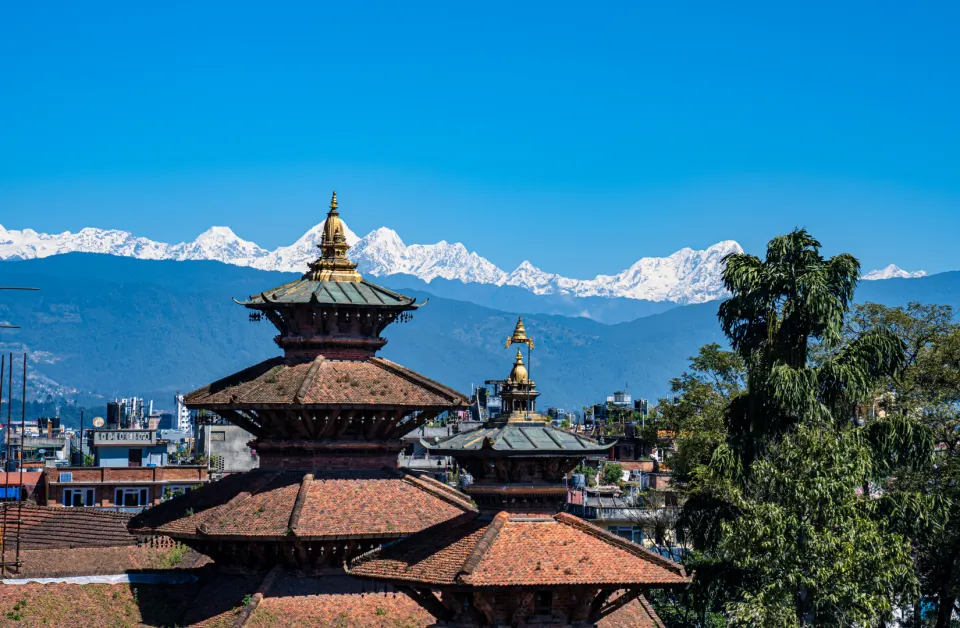
The monsoon withdraws by late September. The air, washed clear by ten weeks of rain, holds visibility better than any other time of year. Mountains that are abstract concepts in May are sharp white edges in October. Sarangkot at sunrise gives you the Annapurna massif in full. Nagarkot offers the Himalayan rim from the Kathmandu Valley's eastern lip. Trekking trails are dry, tea-houses are open, and Lukla flights run their fullest schedule of the year.
Two of Nepal's defining festivals fall in this stretch. Dashain, the country's largest, runs across roughly two weeks in October. Tihar, the five-day festival of lights, follows in late October or early November. For travellers oriented towards heritage and culture, this is the most layered moment to be in Nepal.
The trade-offs are real, and not always written about.
Premium hotels run at full annual rates, often 30 to 40 percent above shoulder pricing. Tea-houses on Annapurna and Everest routes book to capacity, sometimes weeks in advance. Lukla flights, weather-dependent at the best of times, can backlog for two or three days when low cloud sits over the strip. And Dashain shuts down significant parts of urban Nepal as families travel to ancestral homes. Some restaurants close. Some shops close. For a heritage traveller this is part of the experience. For a trekker on a fixed schedule it is a complication.
October and November are still the right answer for most first-time visitors who want the country at its most photogenic and its most reliable. The right answer, with seams.
March and April: The Second Window
This is the case we make most often to slower travellers, and it is the window the standard Nepal article tends to skip.
By mid-March the winter haze that builds over the Kathmandu Valley clears. Mountains return to visibility, though with a softer light than autumn. Rhododendron forests bloom across the mid-hills, sometimes for stretches of trail you would otherwise hike for the views alone. Temperatures are warmer than November at low altitudes, which makes Chitwan and Bardia more comfortable, and Pokhara's lake mornings less wool-jacket-and-coffee.
Crowding sits at roughly half of October. Trails feel like trails again. Tea-houses are open without being saturated. Premium hotel pricing softens, sometimes meaningfully. The country relaxes.
Holi falls in March, and Nepal observes it with less force than India but with enough colour and street energy to give an early-spring trip a clear cultural anchor. Smaller regional festivals dot the calendar through April.
The trade-offs.
Mountain visibility, while good, is not October-good. The air carries more haze by late April, especially below 3,000 metres. Some higher trekking routes still hold residual winter snow into early March. And the monsoon's leading edge can begin to brush the eastern hills by the last week of April.
For travellers prioritising lower crowds, gentler pricing, and softer light, March to mid-April is arguably the better window. Not always; not for every trip; but often, and for the kind of traveller we work with, more often than the calendar would suggest.
Best Time to Visit Nepal: It Depends on the Trip
Nepal contains four substantially different trips, and they have different best times. This is where the standard "October-November" answer breaks down.
Heritage and cultural Nepal (Kathmandu Valley, Pokhara lake culture, Newar craft routes)
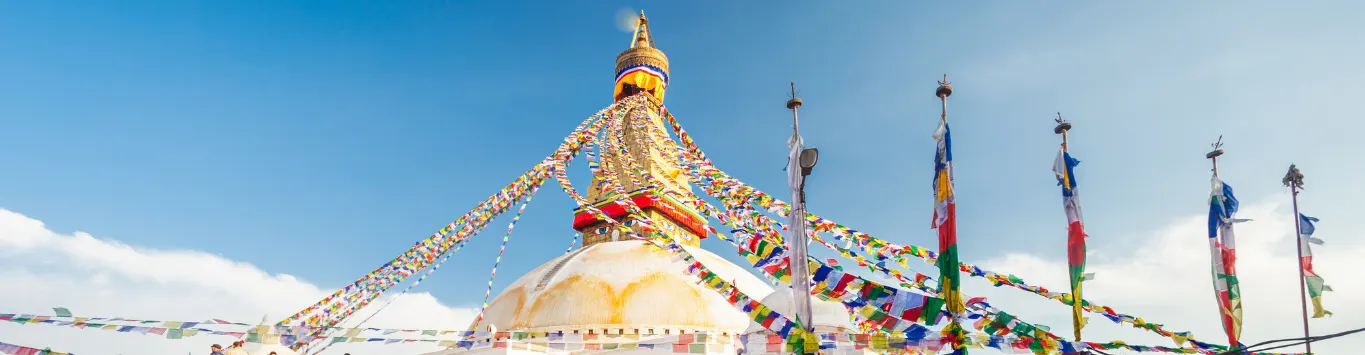
Best window: October through early March. The whole cool, clear stretch works. December and February deliver the cleanest morning visibility of the year and almost no foreign visitor pressure on Boudhanath, Patan, Bhaktapur. A February dawn at Boudhanath, with locals doing their morning circumambulation and the air still cold enough to see breath, is one of the quieter premium experiences anywhere in South Asia. February often beats October for this kind of trip if mountains-in-the-distance matters more to you than mountains-up-close.
This is the trip type our Classic India & Nepal route → [link] is built around, and it is the easiest Nepal trip to recommend across the longest window of the year.
Classic trekking (Annapurna circuit, Everest base camp, Manaslu, Langtang)
Best window: October to mid-November, then March to mid-April. The two clean windows. Outside these, peak monsoon (June through early September) makes most trails wet, leech-active, and largely viewless. Mid-December to mid-February closes higher passes (Thorong La, Cho La) under snow. The window is narrower than people think.
Mustang and the rain-shadow regions (Upper Mustang, Dolpo, parts of Manang)
Best window: late May through September. This is the inversion that almost no first-timer knows about. Upper Mustang sits in the rain shadow north of the Annapurna and Dhaulagiri massifs. The same monsoon that grounds the rest of Nepal leaves Mustang dry, dusty, and at its most accessible. Permits clear faster. Tea-houses are open. The high-desert light is closest to Tibet's. While the rest of the country is unwalkable, Mustang is at its best.
Wildlife (Chitwan, Bardia)
Best window: February to early May. Chitwan and Bardia are open most of the year, but tiger sightings concentrate in late winter and early spring. The annual grass-cutting in Bardia (typically January) opens sightlines and pushes wildlife to the riverbeds. April and May are hot but deliver the strongest tiger and rhino sightings of the year. Peak monsoon (July, August) floods sections of both parks and limits jeep access.
The Months Most Articles Skip
May, the monsoon proper, and the deep winter all get written off. They shouldn't be.
May. Hot and hazy at low altitudes, but the strongest month of the year for Mustang access and one of the best for tigers in Bardia. Pre-monsoon thunderstorms build dramatic afternoon skies in the hills. Hotel rates soften meaningfully. Foreign visitor numbers thin out. If you want Pokhara without the crowds, May rewards you. If you want trekking on the main routes, you wait.
June through September [monsoon]. Wrong for most of Nepal. Right for Upper Mustang, Dolpo, and the rain-shadow regions. Also right for travellers who want green, fed, alive Kathmandu Valley scenery, terraced fields at peak chlorophyll, and the smaller regional festivals (Janai Purnima, Gai Jatra, Indra Jatra) that bring traditional Nepal closer to the surface. Not for high trekking. The compensation is space, atmosphere, and roughly the lowest pricing of the year.
December to mid-February. Cold but the clearest mornings of the year. Boudhanath at first light is at its best in January. Bardia is at its tiger-spotting peak. Pokhara's mountain visibility holds, though you wear layers on the lake. Higher trekking passes are closed. Anything below 2,500 metres is fine, sometimes excellent.
These are the windows where Nepal becomes more like the trip you came for than the trip the calendar suggests. They take more thought to plan around. They are also where the country becomes recognisably itself, instead of a venue.
Festivals to Plan Around (or Carefully)
Nepal's calendar is dense with public ritual. A few are worth shaping a trip around. A few are worth shaping a trip around carefully.
Dashain (mid-October to late October)
The country's largest festival, stretching close to two weeks. Most of urban Nepal travels to ancestral homes. Some shops and restaurants close for the central days. For a heritage and cultural traveller this is fascinating. For a trekker on tight logistics it is a planning constraint. Either work it into the trip with intention, or schedule around it. Don't run into it without context.
Tihar (late October or early November)
Five-day festival of lights. More public-facing than Dashain. Cities are lit, animals are garlanded across consecutive days (crow, dog, cow, ox, brother), and households perform rituals that can be observed respectfully from outside. Generally additive to a trip rather than disruptive. For cultural travellers this is the peak window of the year.
Holi (March)
Observed across Nepal but with less force than in northern India. Adds colour and energy to early-spring trips without typically disrupting logistics. A useful anchor for a March itinerary.
Indra Jatra (early September)
The Kathmandu Valley's most ancient festival. Eight days of masked dances, chariot processions, and the Kumari (the living goddess) appearing publicly in Durbar Square. If your trip overlaps even partially, plan a Kathmandu day around it.
There are other festivals (Tij in August, Buddha Jayanti in May, Maha Shivaratri in February at Pashupatinath) that deserve mention in a longer piece. The four above are the ones likeliest to either make or complicate your trip.
How We Actually Answer the Question
The most useful thing we can tell anyone asking "best time to visit Nepal" is that the question often has the variables in the wrong order.
If you begin with the month you can leave home, and design the trip that fits that month, Nepal will return value in almost any window. Mustang in July. Bardia in March. Boudhanath in February at dawn. The Annapurna foothills in late November. These are not compromises. They are different trips that happen to share a country.
The "best time" is whichever window contains the trip you actually want.
When clients tell us they want Nepal in October, we ask what they want to see. When they tell us they have to come in May, we tell them what to do with it. The answer changes. The country doesn't.
If you have full schedule flexibility and want the most reliable mountains-and-festivals trip Nepal has, October and November remain the answer. If you want the same trip with fewer people and softer pricing, March and April. If you want the trip almost no one in your social circle has taken, the answer lives somewhere else on the calendar.
Either way, the conversation we open with on [link: Plan Your Trip] is which window your life can spare, not which window the calendar suggests. Tell us when you can come, and we will tell you which Nepal that month is best at being.
The right month is the one that contains the trip you actually want. Everything else is a calendar.
Good to know
Sources
- Farbound Travels — title, excerpt and guide content supplied in this row
Written by Mahim Tiwari.
Published May 2026 · Last updated September 2026
Keep reading
Ladakh Travel Guide: Altitude, Seasons and How to Plan the Route
Plan a Ladakh journey through Leh, Nubra and Pangong with clear guidance on acclimatisation, se...
Orchha, Khajuraho and Gwalior: A Central India Heritage Route
A practical guide to Gwalior, Orchha and Khajuraho, including what each destination adds, how m...