In short
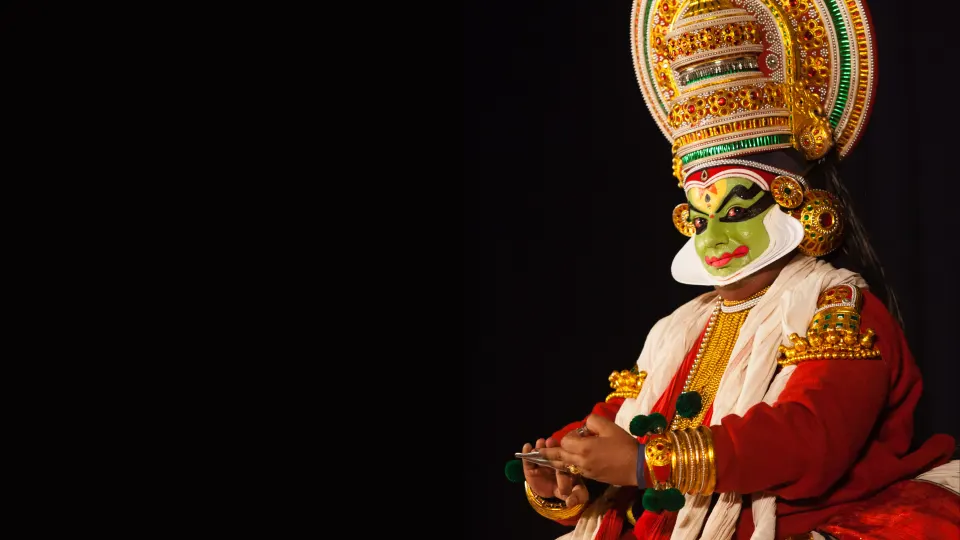
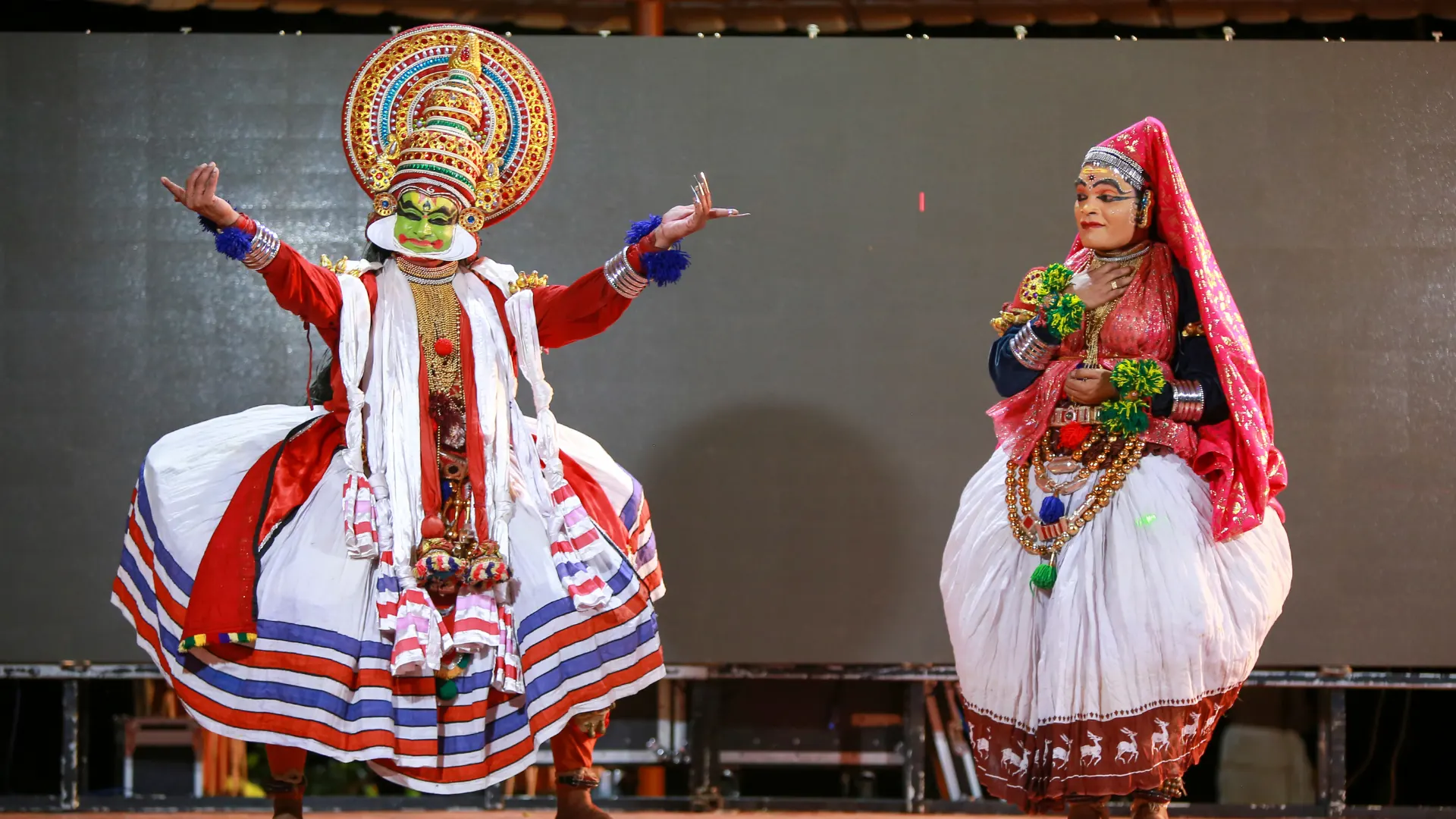
Kathakali is one of the most iconic classical dance forms of India, originating from the state of Kerala. Known for its vibrant costumes, elaborate makeup, and expressive performances, Kathakali is much more than a dance—it’s a powerful form of storytelling. Through detailed gestures, facial expressions, and dramatic movements, Kathakali brings to life ancient stories from Indian mythology, particularly the Ramayana and Mahabharata.
At a glance
- Origin
- Kathakali developed in Kerala more than 400 years ago
- Form
- It combines drama, dance, music and martial-arts traditions
- Visual code
- Makeup colours indicate character types, including green for heroes, red for villains and black for demons
The Origins of Kathakali
Kathakali has a rich history that dates back over 400 years. It evolved from earlier forms of temple rituals and theatrical performances in Kerala, blending elements of drama, dance, music, and martial arts. Traditionally, Kathakali performances were held in temple courtyards and would often last all night, drawing the community together to witness stories of gods, demons, and heroes.
The dance form gained prominence under the patronage of local rulers in Kerala, who encouraged the development of this unique art. Today, Kathakali is recognized worldwide for its dramatic storytelling and intricate dance techniques.
The Elements of a Kathakali Performance
A Kathakali performance is a visual spectacle that involves several key elements:
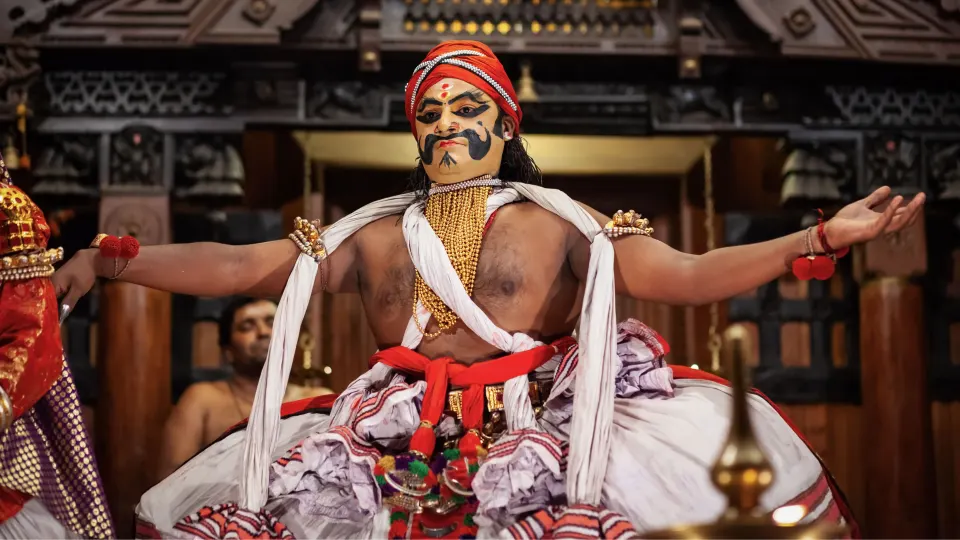
- Costumes and Makeup: The performers wear elaborate costumes and headgear, and their faces are painted in bright colors. Each color symbolizes a specific character type—green for heroes, red for villains, and black for demons. The makeup and costumes are designed to transform the performer into the character they portray, making the performance visually captivating.
- Expressions and Gestures: Kathakali is renowned for its use of facial expressions (known as rasas) and hand gestures (mudras) to convey complex emotions and narratives. Performers undergo years of training to master the precise movements and expressions required to tell these stories without words.
- Music and Rhythm: The rhythm of a Kathakali performance is set by traditional instruments like the chenda (a type of drum), maddalam, and cymbals. The music is essential to the performance, guiding the dancers and enhancing the drama.
The Cultural Significance of Kathakali in Kerala
Kathakali holds a special place in Kerala’s cultural landscape. It’s not just a dance form; it’s a way of preserving the state’s rich heritage and passing it on to future generations. The stories told through Kathakali often carry moral and spiritual lessons, making the performances both educational and entertaining.
For visitors to Kerala, experiencing a live Kathakali performance offers a deep insight into the region’s traditions and values. It’s a unique opportunity to connect with Kerala’s history and culture in a way that’s both engaging and immersive.
Explore Kerala with Farbound Travels
At Farbound, we believe that true exploration goes beyond just sightseeing. Our journeys through South India are designed to immerse you in the local culture, and experiencing a Kathakali performance is a key highlight of our Kerala itineraries.
But Kerala is more than just Kathakali. Our tours also include exploring Kerala’s backwaters on a houseboat, visiting spice plantations, and walking through the historic streets of Kochi. Whether you’re interested in culture, nature, or history, Kerala offers something for every traveler, and Farbound is here to ensure you experience it all.
Plan Your Kerala Journey with Farbound
If you’re planning a trip to Kerala, let Farbound be your guide. We specialize in crafting personalized itineraries that showcase the best of what this beautiful state has to offer. From the dramatic performances of Kathakali to the serene backwaters and lush hills, Kerala is a destination that promises unforgettable experiences.
Sources
- Farbound Travels — title, excerpt and guide content supplied in this row
Written by Salil Tiwari.
Published February 2026 · Last updated September 2026