In short
Udaipur is famous for lakes, palaces, and romance. That image is not wrong, but it is incomplete. The city is better understood as a Rajput capital shaped by water engineering, palace architecture, Mewar art, and the practical geography of Rajasthan.
At a glance
- Best months
- October – March
- Peak season
- November – February
- Monsoon
- July – September
- Heat
- May and June are the hardest months for walking and outdoor sightseeing
When to go
Cool weather makes the city easy to walk, though this sits inside the busy peak season.
Clearer skies and cooler evenings keep Udaipur in its strongest travel window.
The wider October-to-March window still works well, with warmth building later in the month.
Early April can work, but sightseeing should move earlier as heat builds.
High temperatures make walking and long outdoor sightseeing difficult for most first-time visitors.
Heat remains a major constraint before the monsoon begins.
Monsoon rain can slow roads, but greener hills and fuller lakes change the look of the city.
The monsoon brings green landscapes alongside less predictable outdoor movement.
Late-monsoon Udaipur can be visually strong, with the same risk of rain-related friction.
Cooler conditions return and the most practical travel window begins.
Peak-season weather brings cooler evenings and strong overall conditions.
Cool weather and strong travel conditions continue through December.
January: Best time — Cool weather makes the city easy to walk, though this sits inside the busy peak season.
February: Best time — Clearer skies and cooler evenings keep Udaipur in its strongest travel window.
March: Best time — The wider October-to-March window still works well, with warmth building later in the month.
April: Shoulder — Early April can work, but sightseeing should move earlier as heat builds.
May: Off-season — High temperatures make walking and long outdoor sightseeing difficult for most first-time visitors.
June: Off-season — Heat remains a major constraint before the monsoon begins.
July: Shoulder — Monsoon rain can slow roads, but greener hills and fuller lakes change the look of the city.
August: Shoulder — The monsoon brings green landscapes alongside less predictable outdoor movement.
September: Shoulder — Late-monsoon Udaipur can be visually strong, with the same risk of rain-related friction.
October: Best time — Cooler conditions return and the most practical travel window begins.
November: Best time — Peak-season weather brings cooler evenings and strong overall conditions.
December: Best time — Cool weather and strong travel conditions continue through December.
Udaipur is often introduced as the Venice of the East or India’s most romantic city. There is a reason those descriptions have lasted.
The lakes, palaces, ghats, old lanes, and evening light do create one of Rajasthan’s most memorable city experiences. But the better Udaipur trip starts when you look beyond the postcard image.
This was a Rajput capital built around a lake system in a semi-arid landscape. Its palaces grew over nearly 400 years. Its painting tradition recorded court life, devotion, power, hunting, festivals, and memory. Its best experiences depend on timing, water levels, routing, and enough space in the itinerary.
This guide looks at Udaipur as travellers actually experience it on the ground: beautiful, layered, seasonal, and easy to under-plan.
The Lakes: The System Behind the Scenery
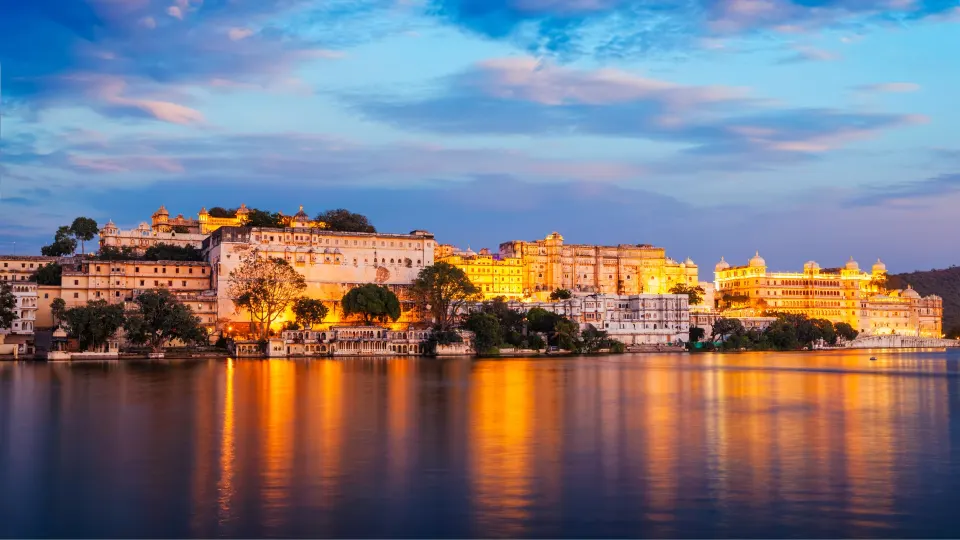
Udaipur is not built around one lake. It is shaped by a network of lakes, including Lake Pichola, Fateh Sagar, Doodh Talai, Rang Sagar, and Swaroop Sagar.
These lakes are central to the city’s identity, but they are not just scenic backdrops. They are part of a water system developed over centuries to collect, store, and manage monsoon runoff from the Aravalli hills.
That context matters.
A capital in this part of Rajasthan had to solve for water. The lakes gave Udaipur its practical foundation, and over time, they also gave the city its visual character. The palaces, ghats, gardens, island structures, and old neighbourhoods all make more sense when seen in relation to the water.
The lake experience is also seasonal. In strong monsoon years, Udaipur feels fuller, greener, and more reflective. The water sits high, the surrounding hills soften, and the city carries the image travellers usually expect. In weaker rainfall years, water levels can drop, and the experience becomes quieter and less dramatic.
That does not make Udaipur less worth visiting. The palace, old city, museums, gardens, food, and surrounding excursions still carry the trip. It simply means travellers and advisors should understand what season and water levels can change before building the itinerary around lake views alone.
The best Udaipur plans treat the lakes as both scenery and structure. They are beautiful, but they are also the reason the city took this shape.
City Palace: 400 Years of Continuous Building
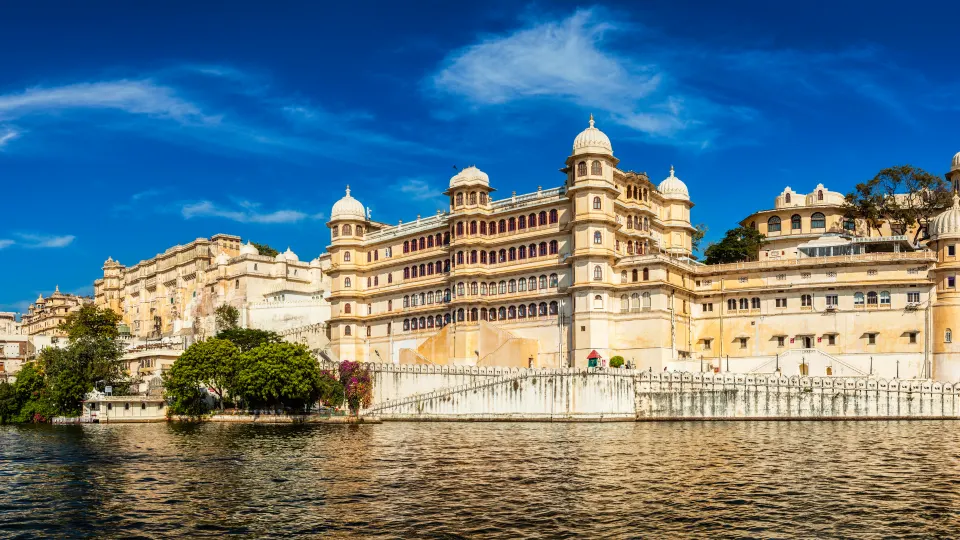
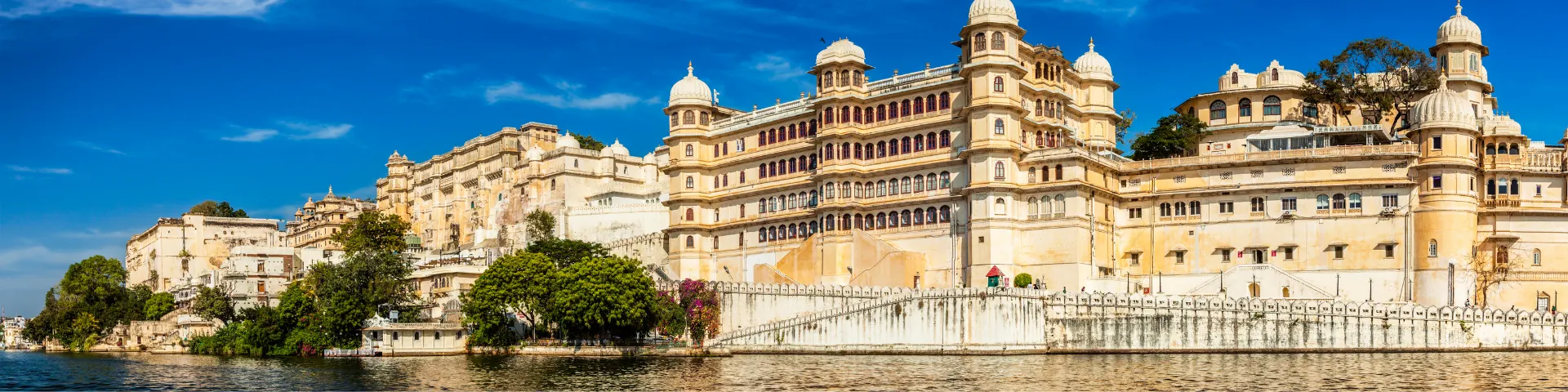
The City Palace sits on the eastern bank of Lake Pichola and dominates the old city. From the water, it appears as one grand palace facade. Inside, it is much more layered.
The complex was built and expanded over roughly 400 years by successive Mewar rulers. Construction began in the 16th century and continued across generations, with each ruler adding courtyards, galleries, balconies, terraces, chambers, and ceremonial spaces.
That is why the palace should not be rushed.
It is not a single building with one design idea. It is a palace complex that grew with the kingdom. You move through narrow passages, open courtyards, raised terraces, royal chambers, durbar halls, armouries, and museum galleries. Some sections feel intimate. Some feel ceremonial. Some are designed for defence, some for public rule, and some for private life.
The palace also holds one of the most important Mewar painting collections. This is not a small decorative add-on. It is one of the clearest ways to understand how the region recorded itself visually.
The paintings carry court scenes, processions, festivals, hunting expeditions, religious devotion, royal life, and political memory. For travellers who want Rajasthan to feel more than architectural, this collection is one of the strongest stops in Udaipur.
Allow 3 to 4 hours for the City Palace if you want to do it properly. With a rushed visit, the palace becomes another large monument. With time and good guiding, it becomes a record of how Mewar built, adapted, ruled, and remembered.
Lake Pichola: Why the Boat Ride Works Best at the Right Time
The Lake Pichola boat ride is one of the most common recommendations in Udaipur. It is popular for a reason, but timing matters.
Morning usually works best if the goal is to understand the city. The light is softer, the water is calmer, and the relationship between the palace, ghats, islands, and hills is easier to read. Afternoon glare can flatten the experience, especially in warmer months.
The boat ride is not valuable only because it is pretty. It gives you a view of Udaipur that you cannot get from land.
From the water, the City Palace’s position makes sense. Jag Mandir, Jag Niwas, the ghats, the old city edge, and the surrounding hills all come into one frame. The boat helps you understand how the city sits around the lake, and why the palace was placed where it was.
Jag Mandir is usually part of the route. The island palace has older roots and was expanded significantly in the 17th century. It is worth taking time here, not just stepping out for photographs. Its location, garden, and relationship to the water help explain how Udaipur used its lake spaces.
Jag Niwas, now the Taj Lake Palace, is another key part of the lake’s visual identity. Travellers usually see it from the outside unless they are staying there or have a reservation. Even from the boat, it helps complete the city’s spatial picture.
Expect the boat ride to take around 45 minutes to an hour. In peak season, it can get busy. Early slots generally work better for a calmer experience. Sunset works well for photography, but it is also the most obvious and crowded time.
Bagore Ki Haveli: Evening Performance and Rooftop Views
Bagore Ki Haveli is an 18th-century mansion on Gangaur Ghat, now used as a museum and performance venue.
The museum is compact and does not need too much time. It has rooms, courtyards, costumes, musical instruments, puppets, and regional objects that give a sense of Rajasthani domestic and cultural life.
The stronger reason to visit is the evening performance.
Udaipur has many hotel-based folk performances, and some are perfectly well done. Bagore Ki Haveli has a better setting and a more direct connection to the city. The performance takes place in the evening, with the haveli, terrace, and lake area giving it a stronger sense of place.
The programme usually includes Rajasthani dance and music traditions such as Ghoomar, Bhopa, and Kalbeliya. It is built for visitors, but it still gives travellers a useful entry point into the region’s performance culture.
This is a good evening plan if you are spending more than one night in Udaipur. It pairs well with a slower day around the palace, old city, and ghats.
Saheliyon Ki Bari: The Garden of the Maidens
Saheliyon Ki Bari is a small 18th-century garden built by Maharana Sangram Singh for the women of the royal court.
It is not large, and it should not be treated like a major Mughal garden. Its appeal is different. It is intimate, shaded, and built around fountains, lotus pools, marble elephants, and enclosed walkways.
That scale is part of the point.
This was a garden designed as a private retreat, not as a public showpiece. It gives a softer view of royal life in Udaipur, away from the formality of the palace and the movement of the old city.
One hour is enough for most travellers. It works well as a quieter stop between heavier sightseeing blocks, especially when the palace and old city begin to feel dense.
In a well-paced itinerary, Saheliyon Ki Bari helps Udaipur breathe.
Ranakpur: When the Detour Is Worth It
Ranakpur is around 90 kilometres from Udaipur and usually takes about two hours by road, depending on conditions and routing.
It is home to one of India’s most significant Jain temple complexes. Built largely in the 15th century, the main temple is known for its carved marble pillars, intricate ceilings, domes, and layered interior spaces.
Ranakpur is not a casual filler stop.
It is worth doing if the itinerary has enough time and the routing makes sense. The temple rewards slow looking. The exterior is restrained compared to what you find inside. The experience builds as you move through the carved marble, pillars, light, shadow, and shifting sightlines.
This is where many Udaipur itineraries make a mistake. They add Ranakpur because it is “nearby,” but do not give it the right space. If the day is packed badly, it becomes a long drive for a short visit. If planned properly, it can be one of the strongest architectural experiences connected to Udaipur.
Ranakpur works best as a half-day or carefully paced day excursion. It can also sit well on a route between Udaipur and Jodhpur, depending on the wider Rajasthan itinerary.
There is also Shilpgram, a crafts village close to Udaipur. It is partly staged, but it can be useful for travellers who want a clearer introduction to regional craft forms, textiles, ceramics, and metalwork. It is not a substitute for deeper craft access, but it can work as a practical stop when time is limited.
When to Visit: The Climate and the Calendar
October to March is the most practical window for Udaipur.
The weather is cooler, the city is easier to walk, and the wider Rajasthan routing works well during this period. November to February is peak season, with clearer skies, cooler evenings, and stronger overall conditions for travel.
March and early April can still work, especially for travellers who are comfortable with warmth. Sightseeing should be planned earlier in the day, with afternoons kept lighter.
May and June are hot. Temperatures can climb sharply, and the city becomes harder to experience on foot. This is not the best window for most first-time travellers.
July to September is monsoon season. Udaipur can look beautiful during and after the rains, especially when the lakes fill and the hills turn green. The trade-off is travel friction. Roads can be slower, rain can disrupt plans, and outdoor movement becomes less predictable.
For most travellers, the answer is simple: choose October to March. For travellers who specifically want green landscapes and are comfortable with some uncertainty, the monsoon period can be considered with the right expectations.
Before You Arrive: Practical Intelligence
Udaipur has a wide range of hotels, from smaller heritage stays to major lakefront and resort properties. The right choice depends less on star rating and more on how the stay fits the trip.
Location matters.
A hotel near the lake or old city gives better access to walking areas, ghats, restaurants, and the City Palace. A resort outside the core may give more space and calm, but it changes the daily rhythm. Neither is automatically better. The right answer depends on the traveller, the trip length, and how much time will be spent inside the city.
The old city is best handled on foot. Vehicles can get close to certain points, but narrow lanes, ghats, palace approaches, and bazaar areas require walking. Comfortable shoes matter more than people expect.
The main shopping areas around Jagdish Temple, the old city lanes, and Chetak Circle have a mix of tourist goods, textiles, paintings, leather, puppets, and souvenirs. Quality varies widely. Travellers interested in textiles, miniature painting, or craft should not rely only on the most visible shops. Better access usually comes through trusted local recommendations or planned workshop visits.
Food in Udaipur is shaped by the city’s Hindu and Jain context, so vegetarian food is strong and widely available. There are also plenty of restaurants serving standard north Indian and tourist-friendly menus. The better meals usually come from knowing where to eat for regional food, not just choosing the restaurant with the best view.
Boat rides can be booked through hotels or directly near the ghat. Morning rides are usually better for understanding the city. Sunset rides are stronger for photographs but busier.
A good Udaipur itinerary should not be overloaded. The city rewards time between stops. Palace, lake, old city, museum, garden, performance, and Ranakpur all need their own pace.
Why Udaipur Still Matters
Udaipur is worth visiting because the familiar image has substance behind it.
The lakes are beautiful, but they are also part of a water system that shaped the city. The palace is photogenic, but it is also a record of four centuries of Mewar rule. The paintings are delicate, but they carry a serious visual history of Rajasthan. Ranakpur is not just an excursion, but one of the strongest architectural experiences within reach of the city.
The clichés around Udaipur are not completely wrong. They are simply the starting point.
Plan Udaipur for its beauty, but give it enough time and structure to understand why that beauty exists.
Want to experience Udaipur with the right route, pacing, hotels, and on-ground handling? Browse our Udaipur journeys and find the right itinerary for your travel style.
Good to know
Sources
- Farbound Travels — title, excerpt and guide content supplied in this row
Written by Salil Tiwari.
Published May 2026 · Last updated September 2026
Keep reading
Luxury Golden Triangle India: What Is Actually Worth Upgrading?
A high-end Golden Triangle trip is not improved by upgrading every line item. Here is where bet...

Best Tiger Safari in India: Ranthambore, Bandhavgarh, Kanha, Pench or Tadoba?
The best tiger safari in India depends on route, season and how many drives you can give it. Co...