In short
India for first-time visitors - India will not be what you expect. And that's the point.
At a glance
- First-route principle
- Start with a coherent region rather than trying to cover the whole country
- Daily pace
- Two anchor experiences a day is plenty in the first week
- Hotel role
- Location and function matter as much as brand or star category
- Logistics
- Buffer time is essential because Indian city and road movement often takes longer than expected
Most people arrive in India carrying one of two mental images. The first is filtered through travel documentaries and Instagram: golden hour at the Taj Mahal, spice-scented alleyways, smiling locals in vibrant clothing. The second comes from every travel warning ever written: a country to brace yourself for rather than enjoy.
Neither is accurate. Both are partially true.
India operates at a different dynamic range to most countries. The pace is real, the texture is dense, the days are full. But local people navigate it successfully every single day. They have routines, shortcuts, and an entire system of unwritten rules that make sense once you stop fighting them. The trick is to observe before you react.
This guide isn't about romanticising India or minimising the legitimate challenges of travelling here for the first time. It's about calibrating your expectations so you can actually enjoy the experience instead of white-knuckling your way through it.
The Real Problem with First-Timer Expectations
You've probably read at least a dozen India travel guides by now. They all say something like "Embrace the chaos!" or "It's overwhelming but amazing!" These platitudes aren't wrong, exactly. They're just not useful.
Here's what actually happens. You land, and the sensory input is immediate and inescapable. Light, sound, scent, motion, scale - all at once, all unfiltered. Your nervous system reads it as a threat at first because it's genuinely different from most of the world you've experienced. The defensive response is automatic. You tighten. You become cautious. You misread ordinary moments as something more loaded.
After a few days, something shifts. You realise the intensity isn't directed at you. People aren't trying to overwhelm tourists - they're just living. The vendor selling chai is running a small business that's been in his family for two generations. The traffic isn't chaos - it's a system with its own logic, one you'll start to read by day three. Once you stop interpreting unfamiliarity as threat, you can start to actually see what's in front of you. Once you stop taking it personally, you can start to actually see what's happening around you.
This adjustment period is real. It typically lasts two to four days. Plan for it. Don't schedule six sites on day two. You won't see them, and you'll be exhausted and frustrated.
Where First-Timers Should Actually Start
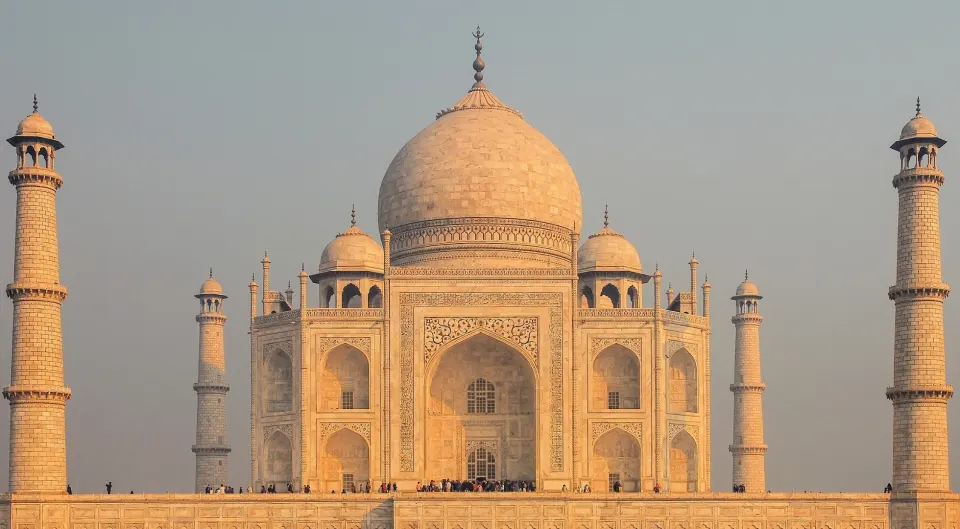
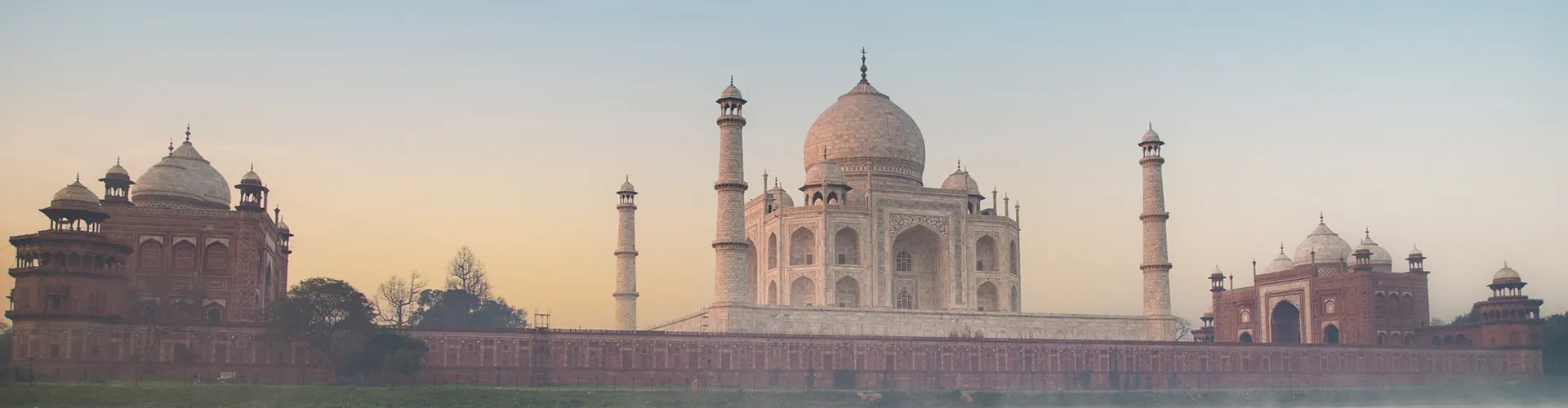
The Golden Triangle - Delhi, Agra, Jaipur - is recommended for a reason. It works. It has the major monuments (Taj Mahal, Jama Masjid, City Palace), it has mature tourism infrastructure, and it has enough variety to give you a genuine sense of different parts of India without requiring you to be an expert navigator.
For a first trip, the Golden Triangle is the right starting point. Yes, it's well-trodden. That's not a bug - it's a feature. The infrastructure exists because millions of travellers have already worked out the logistics. The hotels are experienced with international guests. The guides know how to read a group. The restaurants have figured out food that travels well across palates.
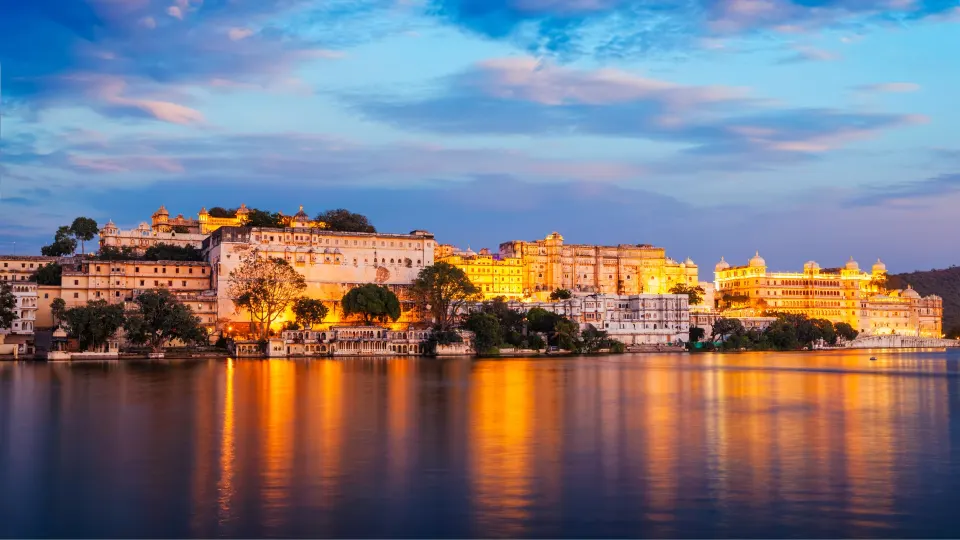
If you have ten days or more, consider expanding. Adding the Rajasthan circuit - Pushkar, Jodhpur, Udaipur → https://www.farboundtravels.com/journeys/golden-triangle-rajasthan gives you depth and significantly fewer other tourists. Or change register entirely and pair the north with Kerala - coastal, tropical, far quieter than the north. The south feels almost like a different country, which turns out to be useful context for understanding India as a whole.
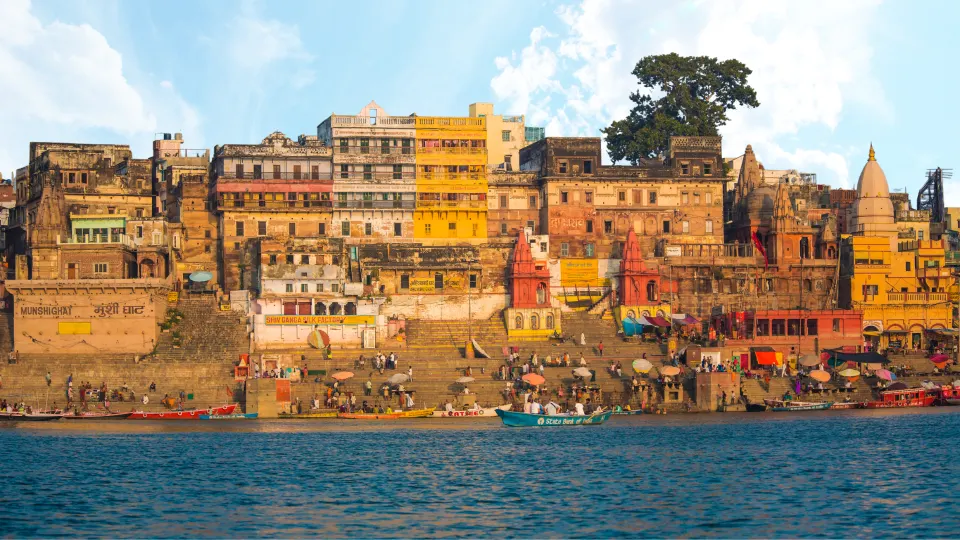
One thing to avoid: don't start with Varanasi on day one. Varanasi is intense. It's one of the holiest sites in Hinduism, it sits on the Ganges, the spiritual density is thick, and the sensory experience is extreme even by Indian standards. It works brilliantly as day seven or eight, once you have India context. Day one? You'll be too disoriented to appreciate it, and you risk taking the wrong impression home with you.
The Logistics Reality
This is where most of the anxiety lives, and where most guides get it wrong. The mechanics of getting around India are genuinely different from Western travel - but the question isn't "how do I figure all of this out?" , It's "do I want to figure all of this out, or do I want to actually be on holiday?"
Here's the lay of the land.
India runs on its railways. The network is one of the largest in the world and it's how the country moves. Long-distance trains are reliable and atmospheric, and a well-chosen overnight journey is a memorable part of any first trip - but only if you're booked into the right class, on the right route, and arriving fresh. The wrong train at the wrong time of year is something else entirely. Cities and shorter intercity hops increasingly run on domestic flights - and a flight that saves you a tired evening is often worth more than an extra train.
Within cities, ride-hailing apps work in all the major hubs. Auto-rickshaws are the local rhythm, and they are part of the experience - but the difference between a good auto journey and a frustrating one comes down to context most first-timers don't have. Heritage hotels and serviced cars handle this layer for you, which is why most considered first trips don't run on autos. You can absolutely take them; you just want them to be a chosen experience, not your default infrastructure.
Where you stay matters more in India than in most countries. Your hotel isn't just a bed - it's your base of operations. It's where you decompress at the end of a full day, where you slow down between experiences, where you regroup and plan the next day. India also happens to be a country where the hospitality at the top end is genuinely world-class: working palaces in Rajasthan, heritage haveli stays in old cities, restored colonial properties in Kerala, properties that have been hosting travellers for longer than most Western hotel brands have existed. Choosing the right one - and choosing different kinds across a trip - does more for your experience than almost any other decision.
The principle underneath all of this: in India, the gap between the right logistics and the wrong logistics is enormous, and the gap is invisible from the outside. The question to ask before you go isn't how to handle the logistics. It's who.
Health and the Sensory Dimension
You'll hear horror stories about traveller's stomach in India. Here's the reality: it happens, but it's not inevitable, and it's not the catastrophe the internet makes it out to be.
A few principles that hold across the country. Drink only bottled or filtered water - even in nice hotels, ask. Restaurant food at properties and established establishments is generally fine. Street food from busy stalls is also generally fine - the logic is counterintuitive but simple: high turnover means fresh food. The dosa stand selling two hundred dosas a day is safer than the empty restaurant. What you want to avoid is mediocre tourist-trap restaurants in heavy footfall areas - that's where corners get cut.
You might feel slightly off on day one or two. This is normal and usually passes within twelve to twenty-four hours; it's your system adjusting to different water and a different microbiome. If you develop severe symptoms - high fever, blood in stool, persistent vomiting - see a doctor. Indian medical care in cities is genuinely good and often surprisingly inexpensive. A reputable trip planner will have a doctor on call for exactly these moments, which is one of the underrated reasons to travel through one.
Travel insurance with medical coverage is essential. It's cheap, and it's your safety net. Vaccines are a conversation with your doctor, but typhoid and Hepatitis A are common recommendations; longer trips and certain regions add a few more.
There's also the sensory dimension, which is what most travellers underestimate. India operates at a higher resolution than most countries - more sound, more colour, more scent, more layering of all three than you'll have encountered elsewhere. Temple bells against traffic. Marigolds against woodsmoke. The call of a chai vendor cutting through a courtyard at dawn. Some of it is beautiful, some of it is functional, all of it is happening at once. It is, more than anything, full - and being inside something that full takes a few days to settle into.
By day three, something shifts. You stop processing all of it consciously - the layering becomes part of the texture rather than something you're holding at arm's length. But on day one, you may simply feel tired in a way you can't quite explain. That's not a flaw in India. It's your system tuning to a country with more going on than the one you flew in from.
Build pauses into your day. Return to your hotel between experiences. Sit on the terrace for an hour with a drink. Take a long shower. This isn't a sign you're not coping - it's how experienced India travellers operate. The right property, in this moment, is everything.
The Over-Scheduling Problem
Most first-timer itineraries are absurdly aggressive.
The template usually looks like this: Day 1 arrive, Day 2 Delhi (Red Fort, Jama Masjid, India Gate), Day 3 Agra (Taj Mahal, Agra Fort), Day 4 Jaipur (City Palace, Jantar Mantar, Hawa Mahal). That's three major cities and six major monuments in four days.
India doesn't move that fast. Crossing Delhi takes ninety minutes. The Taj Mahal deserves actual time, not a photo and a queue. A monument visit with a guide who knows the context takes ninety minutes, not thirty. Then you find a side street that pulls you in, or you sit down for chai, or you simply need to slow down.
Two anchor experiences a day is plenty in your first week. Three feels rushed. Most first-time India trips either skim the surface or wear travellers out before they've found their rhythm.
Build in buffer time. Plan for things to take longer than you think. Schedule rest days, especially in your first week. This isn't wasting time - it's the difference between experiencing India and consuming India like content.
For the deeper context that turns a monument into a story, our piece on Agra beyond the Taj Mahal → https://www.farboundtravels.com/travel-guides/agra-beyond-the-taj-mahal] is a useful companion read.
What Actually Separates a Good First Trip from a Bad One
Most first-time India trips either underwhelm or overwhelm. The gap usually comes down to three things, and they're invisible until you're already in the country.
The first is logistics. Not the booking - the orchestration. Knowing that the train you wanted is the wrong train in October. Knowing that the road from Jaipur to Jodhpur is six hours and not four, and that breaking it with a stop in Pushkar transforms the day. Knowing which airports run on time and which don't. Having a private car and a driver who reads traffic the way locals do. None of this is the kind of thing you can Google. It's pattern recognition built over years.
The second is information - the contextual layer that turns a monument into a story. Seeing the Taj Mahal is fine. Understanding that Shah Jahan was imprisoned by his own son in Agra Fort and spent his final years staring at the tomb he had built for his wife - that transforms the visit. The same is true everywhere in India. Without context, you see beautiful objects. With context, you see a civilisation.
The third is your base of operations. Not just a nice hotel, but the right hotel for that leg of the trip - chosen for its location, its atmosphere, its quietness, the food its kitchen does well, the way its staff handles a guest who's having a hard day. India has some of the best hospitality on earth at the top end, and the right combination of properties across an itinerary genuinely is the difference between a good trip and a great one.
These three things aren't optional luxuries. They're what stand between "I survived India" and "I loved India." You can build them yourself over the course of three or four trips, learning from your own mistakes. Or you can travel with someone who's already built them - which is, more or less, the entire reason companies like Farbound exist.
A pre-trip checklist
Before you go: travel insurance with medical coverage (non-negotiable); a vaccine conversation with your doctor four to six weeks before travel; a real book about India - not a travel guide, actual context, like Suketu Mehta's Maximum City or William Dalrymple's The Anarchy; a loose, considered plan with two anchor experiences per day, rest days built in, and buffer time everywhere; and the right people on the ground - either you've travelled India enough to have a network already, or you have someone whose job it is to be that network for you.
When you arrive: eat something light on day one; don't schedule anything for day two afternoon; walk your immediate neighbourhood and notice how things work; talk to your hotel staff because they know everything; expect to feel weird on day two - this is normal, and by day four it will be gone.
During your stay: buffer your itinerary because things take longer; see less, understand more; if something is stressing you, skip it. You won't regret missing one monument. You will regret burning out.
The honest ending
India is genuinely different. It's more layered, more alive, and more beautiful than most first-timers expect - and it's also kinder, more patient, and more rewarding of attention than any travel warning will ever convey. The country meets you at the level you bring to it. You'll have moments that catch you off guard. You'll misread a situation, or feel briefly out of your depth in a way that, on reflection, you'll laugh about. You'll definitely waste money on something that wasn't worth it.
You'll also see something you'll think about for years. You'll have a conversation with a stranger that changes how you think. You'll realise that the way you were taught to navigate the world is just one option, and not the only one.
That is the actual reason to go. Not for the Taj Mahal, though it is stunning. Not for the spirituality or the beaches or the food, though those are all real. You go because encountering a genuinely different system of living - and realising you can function in it - is how you actually expand.
The richness isn't something to brace against. It's the entire point. And once you stop holding it at arm's length, you'll wonder why no one travels India the way it actually deserves.
Ready to plan a first trip done well? A Farbound advisor handles the logistics, builds in the context, and chooses the properties that become your real base. The difference between "I got through it" and "I actually experienced India."
Plan Your Trip → https://www.farboundtravels.com/plan-your-trip
Good to know
Sources
- Farbound Travels — title, excerpt and guide content supplied in this row
Written by Salil Tiwari.
Published May 2026 · Last updated September 2026
Keep reading
Golden Triangle India: How Many Days Do You Actually Need?
Five days can cover Delhi, Agra and Jaipur. Six or seven days usually makes the Golden Triangle...

India Visa Guide for Tourists: e-Visa Requirements and What to Check
A practical guide to India's tourist e-Visa: official application site, documents, application...