In short
Rajasthan has palace hotels that can justify changing the route or adding another night. Here is how to decide which properties are worth planning around.
At a glance
- Best island-palace stay
- Taj Lake Palace, Udaipur
- Best monumental royal residence
- Umaid Bhawan Palace, Jodhpur
- Best Jaipur palace anchor
- Rambagh Palace
- Smaller Jaipur option
- Rajmahal Palace RAAS
- Rural palace choices
- Samode Palace and RAAS Devigarh
- Planning rule
- A palace hotel should justify extra time, not only a higher rate
When to go
Cool days and cold mornings suit Jaipur, Jodhpur and Udaipur. Demand is high at the best-known palace hotels, so room category should be protected early.
One of the easiest months for a palace-led Rajasthan trip, with comfortable sightseeing weather and strong conditions for hotel time outdoors.
Early March remains excellent. Temperatures rise later in the month, so long outdoor days work better with earlier starts.
Hot afternoons make well-located hotels and slower pacing more valuable. Palace courtyards and pools become more useful parts of the day.
Very hot across much of Rajasthan. Rates can soften, but this is not the easiest first-trip window for palace-city touring.
Heat remains significant before monsoon influence builds. A hotel with strong indoor spaces and a good pool matters more.
Monsoon brings greener landscapes, heat and humidity. Udaipur and the Aravallis can look especially good, but weather is less predictable.
Green landscapes continue around Udaipur and the Aravallis. Humidity and showers remain part of the trip.
Conditions improve as the monsoon retreats. Late September can be a useful bridge into the main season.
The main Rajasthan season returns. Strong month for palace stays, city touring and outdoor dining.
One of the most dependable months for Rajasthan. Demand rises quickly at iconic hotels.
Excellent touring weather. Christmas and New Year can carry the year's highest rates and minimum-stay pressure.
January: Best time — Cool days and cold mornings suit Jaipur, Jodhpur and Udaipur. Demand is high at the best-known palace hotels, so room category should be protected early.
February: Best time — One of the easiest months for a palace-led Rajasthan trip, with comfortable sightseeing weather and strong conditions for hotel time outdoors.
March: Best time — Early March remains excellent. Temperatures rise later in the month, so long outdoor days work better with earlier starts.
April: Shoulder — Hot afternoons make well-located hotels and slower pacing more valuable. Palace courtyards and pools become more useful parts of the day.
May: Off-season — Very hot across much of Rajasthan. Rates can soften, but this is not the easiest first-trip window for palace-city touring.
June: Off-season — Heat remains significant before monsoon influence builds. A hotel with strong indoor spaces and a good pool matters more.
July: Off-season — Monsoon brings greener landscapes, heat and humidity. Udaipur and the Aravallis can look especially good, but weather is less predictable.
August: Off-season — Green landscapes continue around Udaipur and the Aravallis. Humidity and showers remain part of the trip.
September: Shoulder — Conditions improve as the monsoon retreats. Late September can be a useful bridge into the main season.
October: Best time — The main Rajasthan season returns. Strong month for palace stays, city touring and outdoor dining.
November: Best time — One of the most dependable months for Rajasthan. Demand rises quickly at iconic hotels.
December: Best time — Excellent touring weather. Christmas and New Year can carry the year's highest rates and minimum-stay pressure.
Rajasthan has palace hotels that are worth more than a line on the accommodation list.
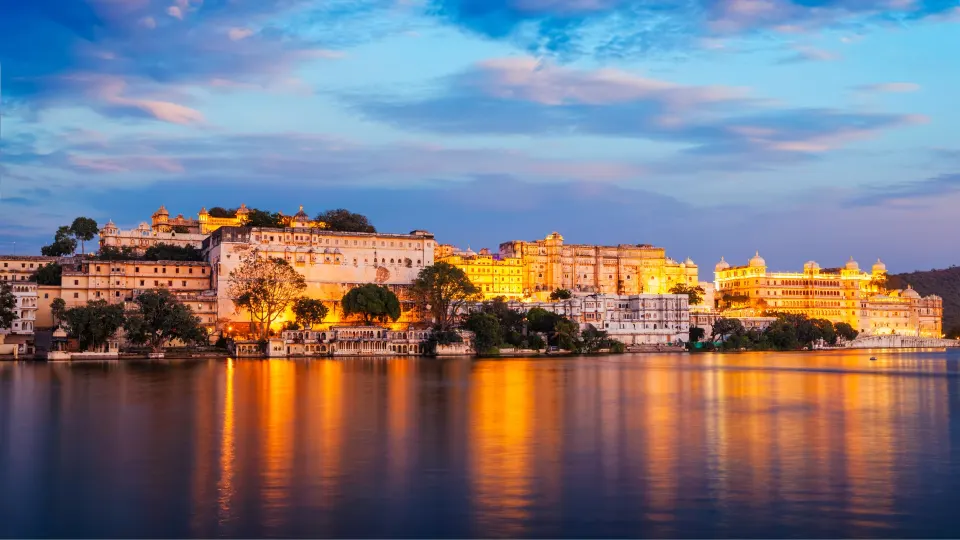
A former summer palace in the middle of Lake Pichola, a working royal residence above Jodhpur and a former Maharaja's home in Jaipur all change how the trip is planned. They affect how many nights a city deserves, when sightseeing should stop and how much of the day should be left for the hotel itself.
The useful question is not which palace hotel is the most famous. It is which one gives the route something you cannot reproduce with a very good modern five-star.
The short answer: the hotel has to earn the extra time
A palace hotel is worth building around when the property itself is one of the reasons for staying in that city. That usually means a setting you cannot reproduce elsewhere, enough history or atmosphere to justify several hours at the hotel, and a room category that supports the reason for booking.
If you arrive at 10 PM and leave at 7 AM, even an extraordinary palace can become an expensive bed. If you have a slow afternoon, dinner on the property and time to use the gardens, lake or public rooms, the same hotel can change the character of the trip.
That is why the route should be decided before the hotel wish list.
Taj Lake Palace, Udaipur: the clearest destination-hotel choice
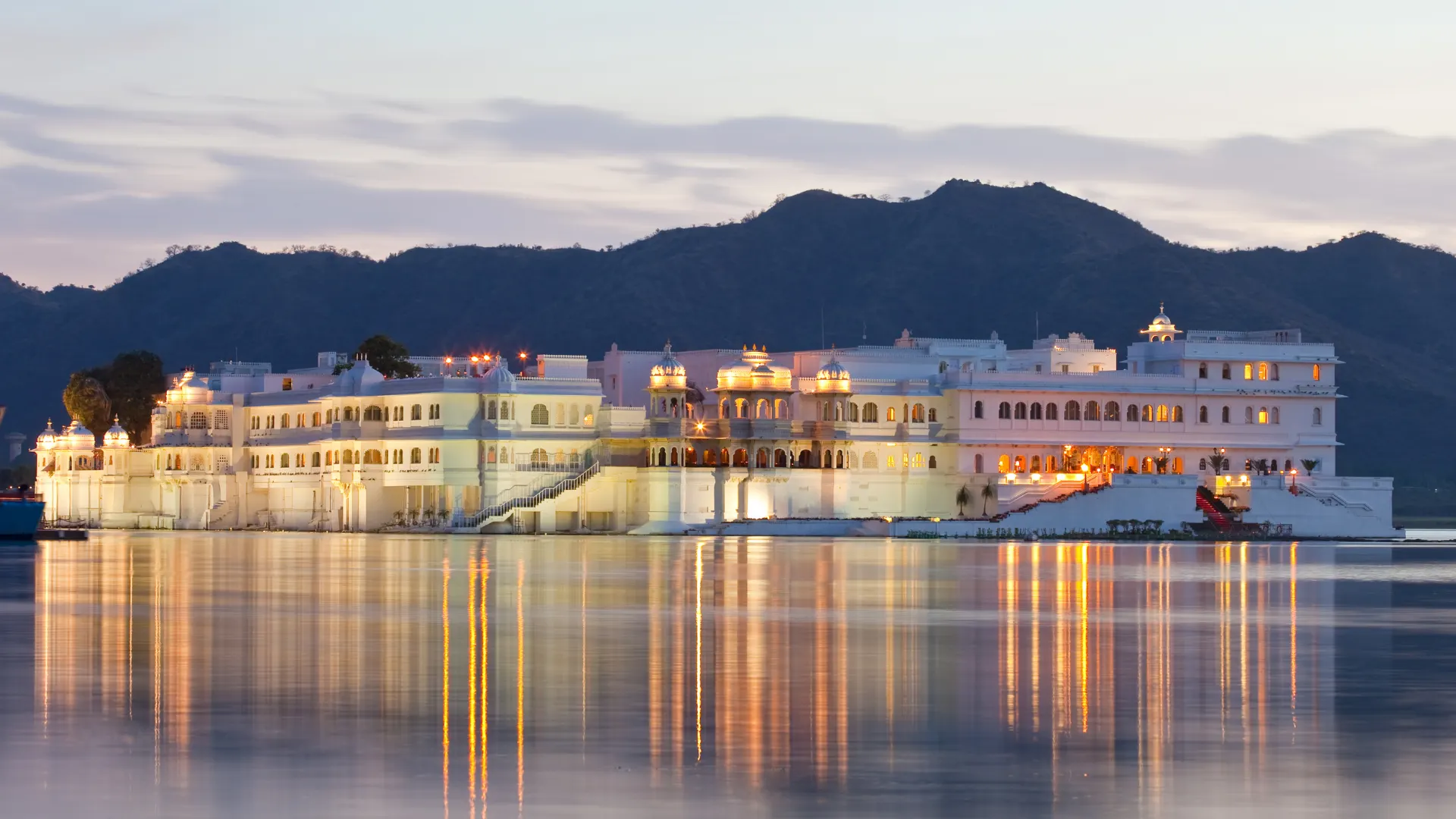
Taj Lake Palace occupies Jag Niwas on Lake Pichola. Taj records that the palace was built between 1743 and 1746 by Maharana Jagat Singh II and used as a summer retreat by the Mewar royal family.
Its island setting is the reason it can justify changing an itinerary. Arrival is by boat, the lake surrounds the property and Udaipur's City Palace and surrounding hills remain part of the view even when you are no longer sightseeing.
For travellers who want the hotel to be part of Udaipur rather than simply a base in Udaipur, this is one of the strongest choices in Rajasthan. It can justify three nights in the city rather than two, particularly if one afternoon is deliberately left open.
Room category still matters. Do not assume every room delivers the same lake orientation or sense of space. The hotel name is only the first decision.
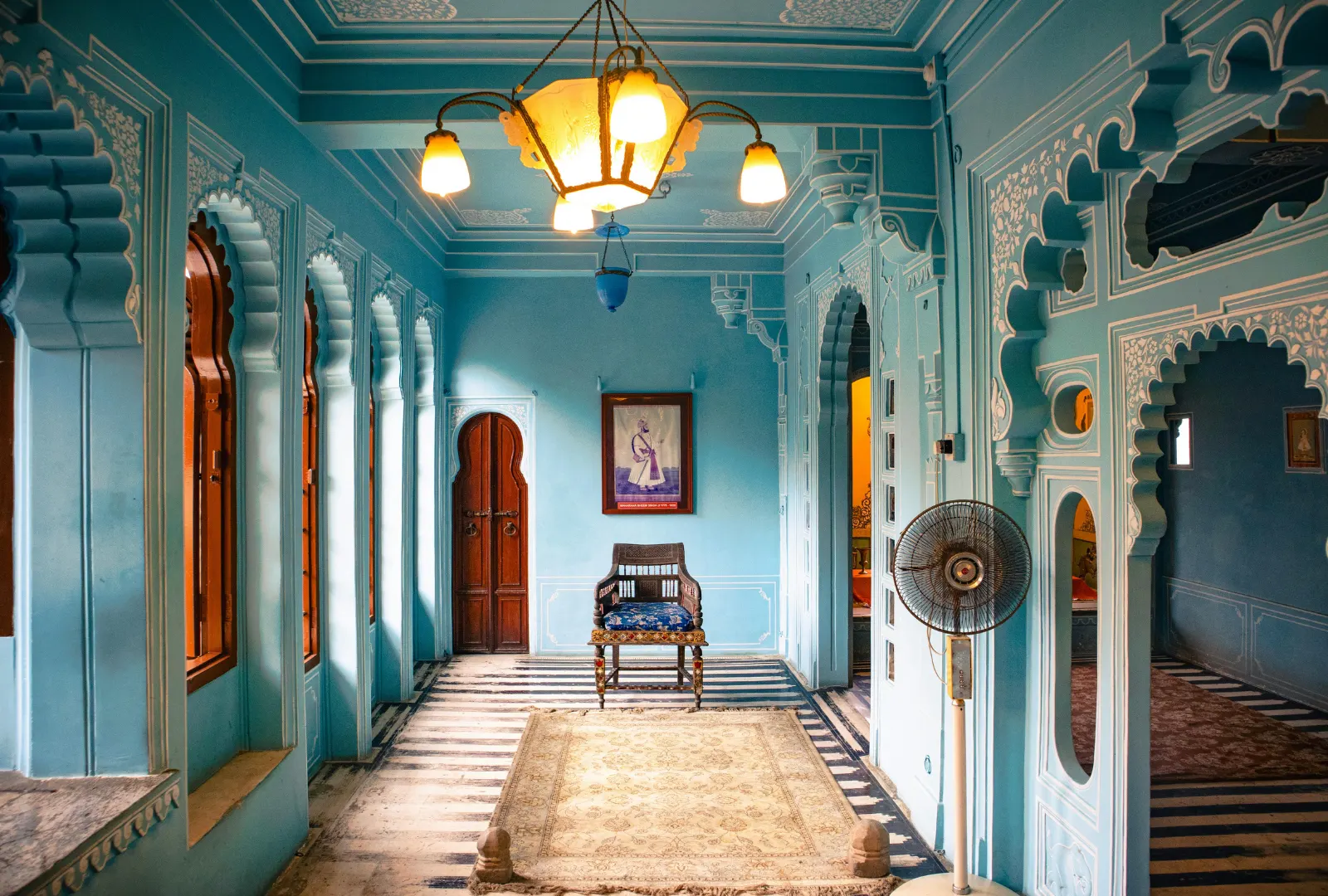
Umaid Bhawan Palace, Jodhpur: scale, history and a living royal residence
Umaid Bhawan Palace sits above Jodhpur in 26 acres of gardens. Taj describes it as an active royal residence, with the royal family occupying its own wing, and the hotel operating within the larger palace.
The experience is very different from staying inside Jodhpur's old city. The palace is monumental, spacious and deliberately removed from the lanes below Mehrangarh. That is its strength for travellers who want the hotel itself to feel like a major chapter of the trip.
It is also the reason the property is not automatically right for everyone. A traveller who wants to step outside into the old city may prefer a smaller heritage hotel below the fort. A traveller who wants gardens, Art Deco interiors, a large pool and a strong sense of occasion may find Umaid Bhawan much more compelling.
This is a good example of why 'best hotel' and 'best hotel for this traveller' are not the same question.
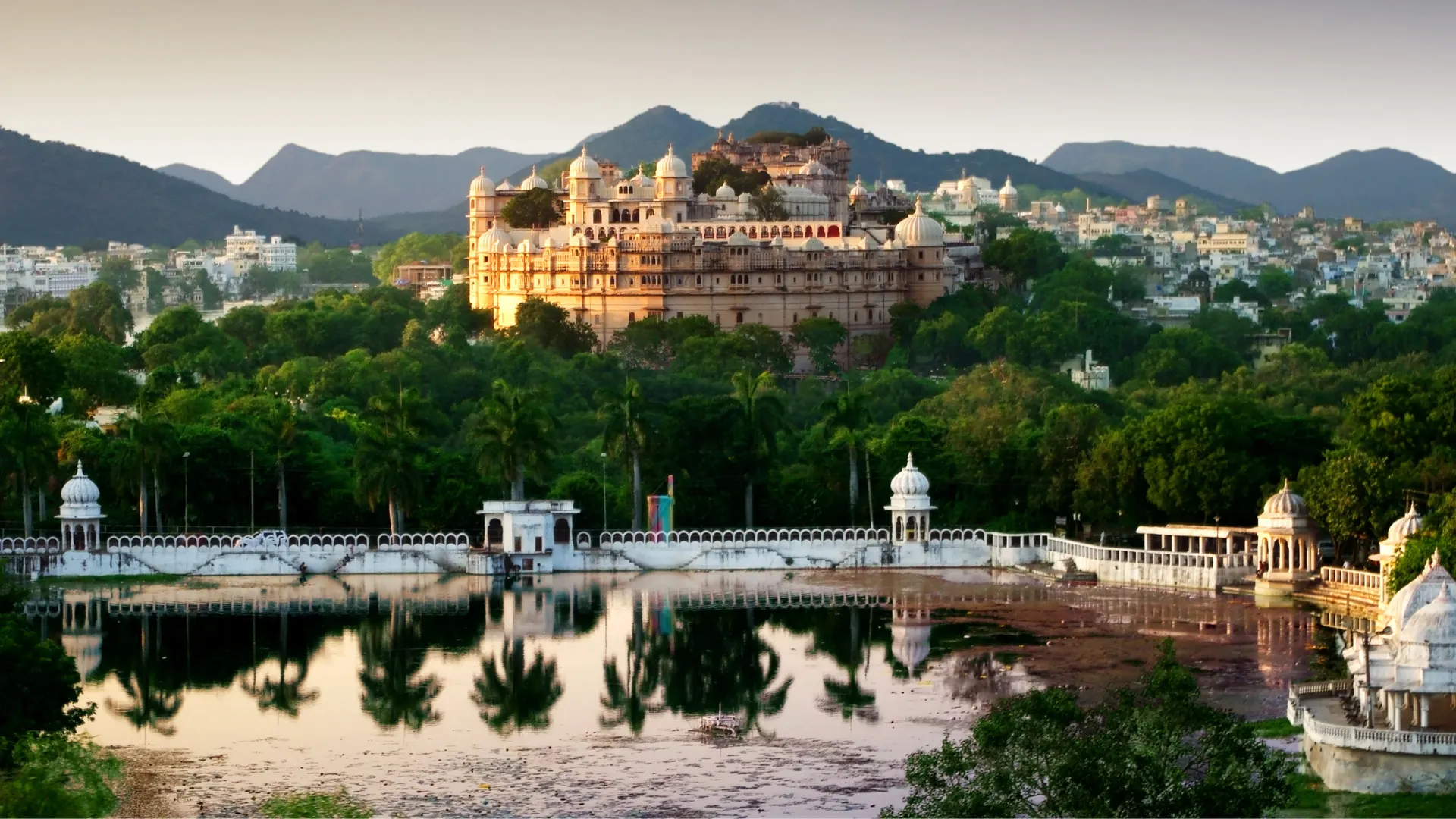
Rambagh Palace, Jaipur: when the hotel continues Jaipur's royal story
Rambagh Palace was built in 1835 and later became the residence of Maharaja Sawai Man Singh II and Maharani Gayatri Devi. Today it operates as a Taj palace hotel within Jaipur.
Its advantage is not that it is simply grand. It keeps the Jaipur story going after Amber Fort, City Palace and the old city. A palace walk, time on the lawns or dinner at the hotel can sit naturally inside a two or three-night Jaipur stay.
That makes Rambagh especially strong for first-time travellers who want history and hotel atmosphere in the same place. It is less about retreating from Jaipur and more about staying inside another layer of it.
If privacy, resort space and separation from the city matter more, a property such as The Oberoi Rajvilas may be a better fit even though it is not a historic palace in the same sense.
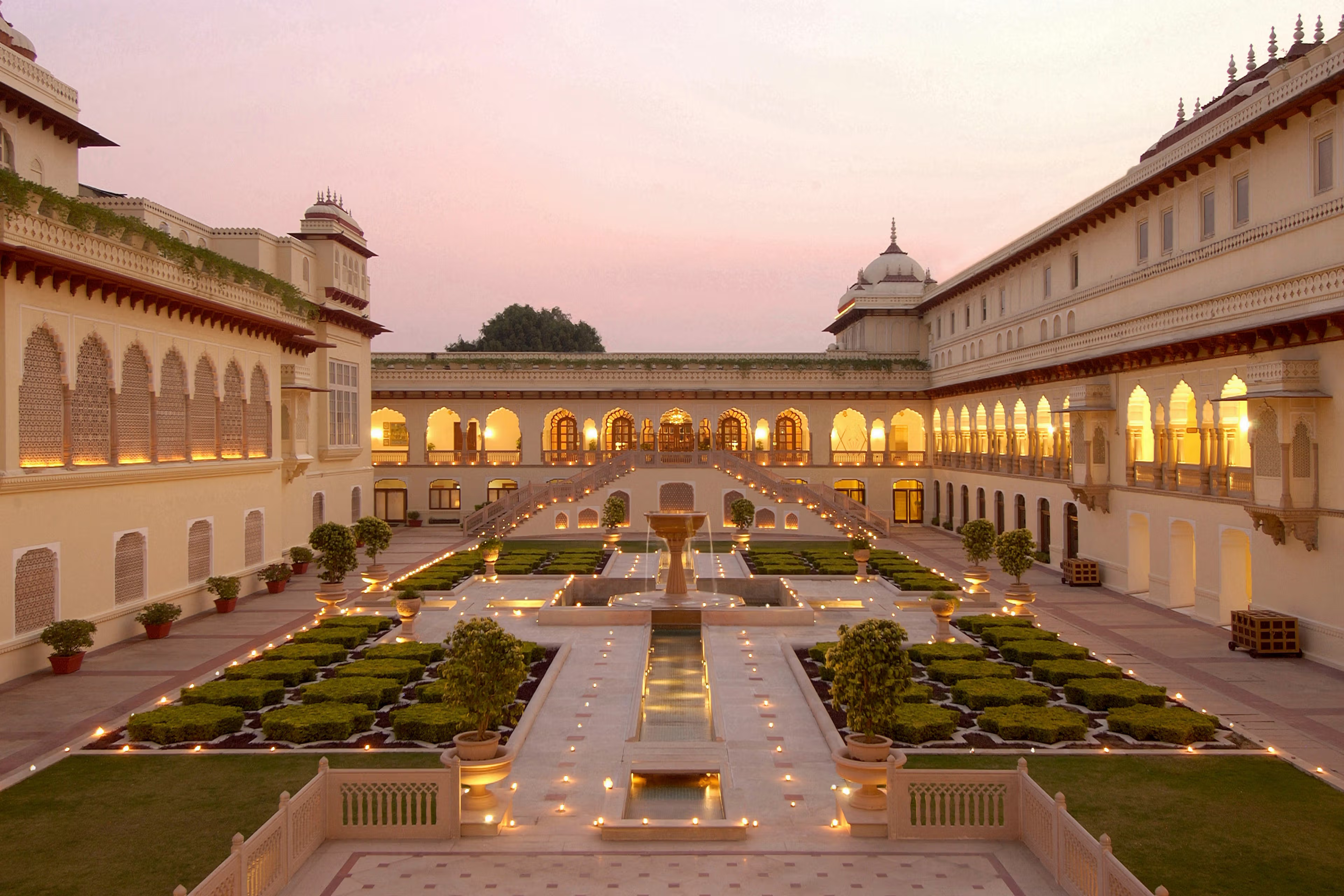
Rajmahal Palace RAAS, Jaipur: a smaller royal scale
Rajmahal Palace was built in 1729 and RAAS describes it as a former home of Jaipur's royal family. The hotel has only 13 rooms and suites, which makes the experience more residential than monumental.
This is useful for travellers who like the idea of royal history but do not want the scale and ceremony of a large palace hotel. The Art Deco influence, gardens and smaller room count create a different Jaipur stay from Rambagh.
For couples or repeat visitors, this can be a stronger choice than automatically booking the city's largest palace. It is also a reminder that 'palace hotel' is a broad category, not one standard style of stay.
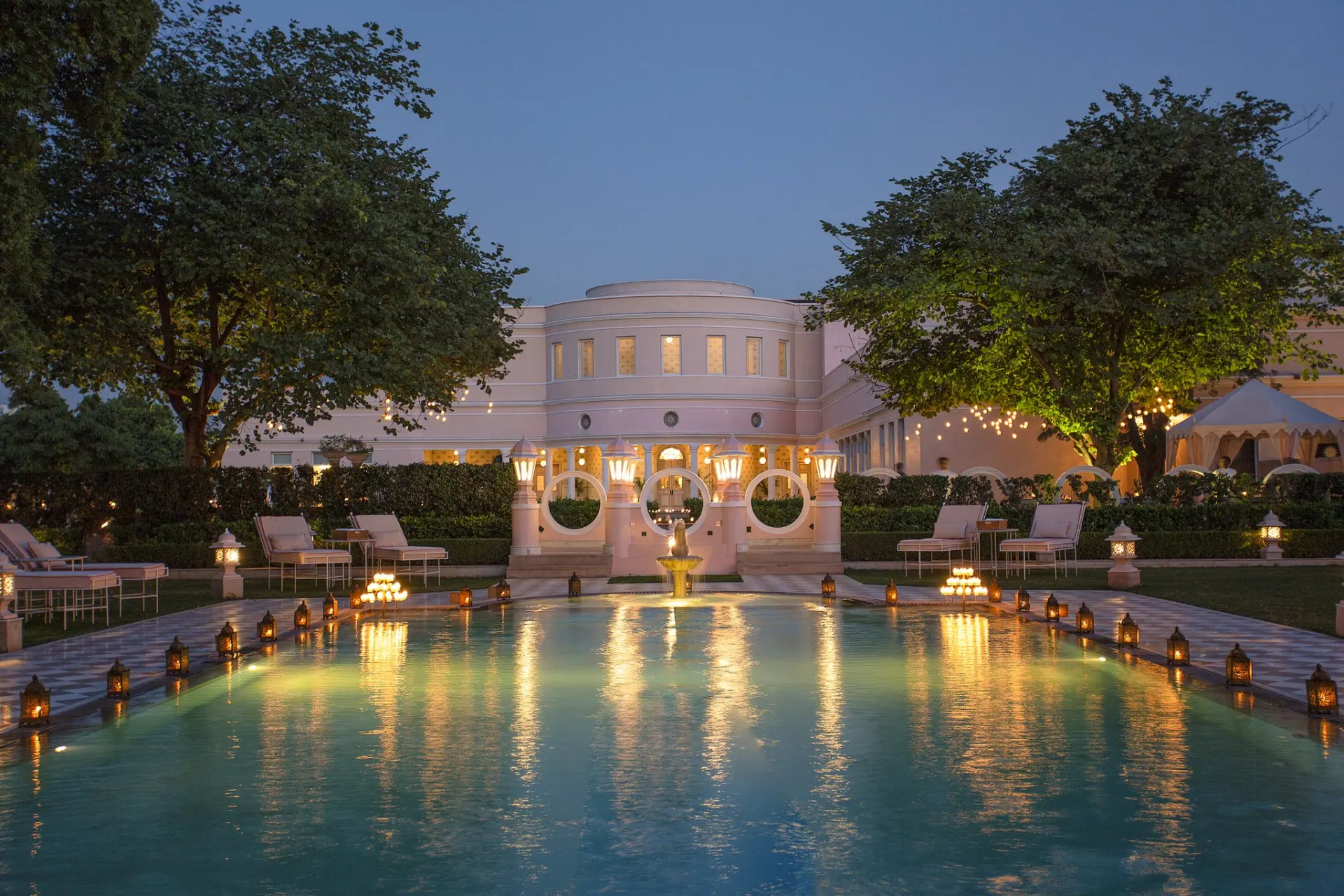
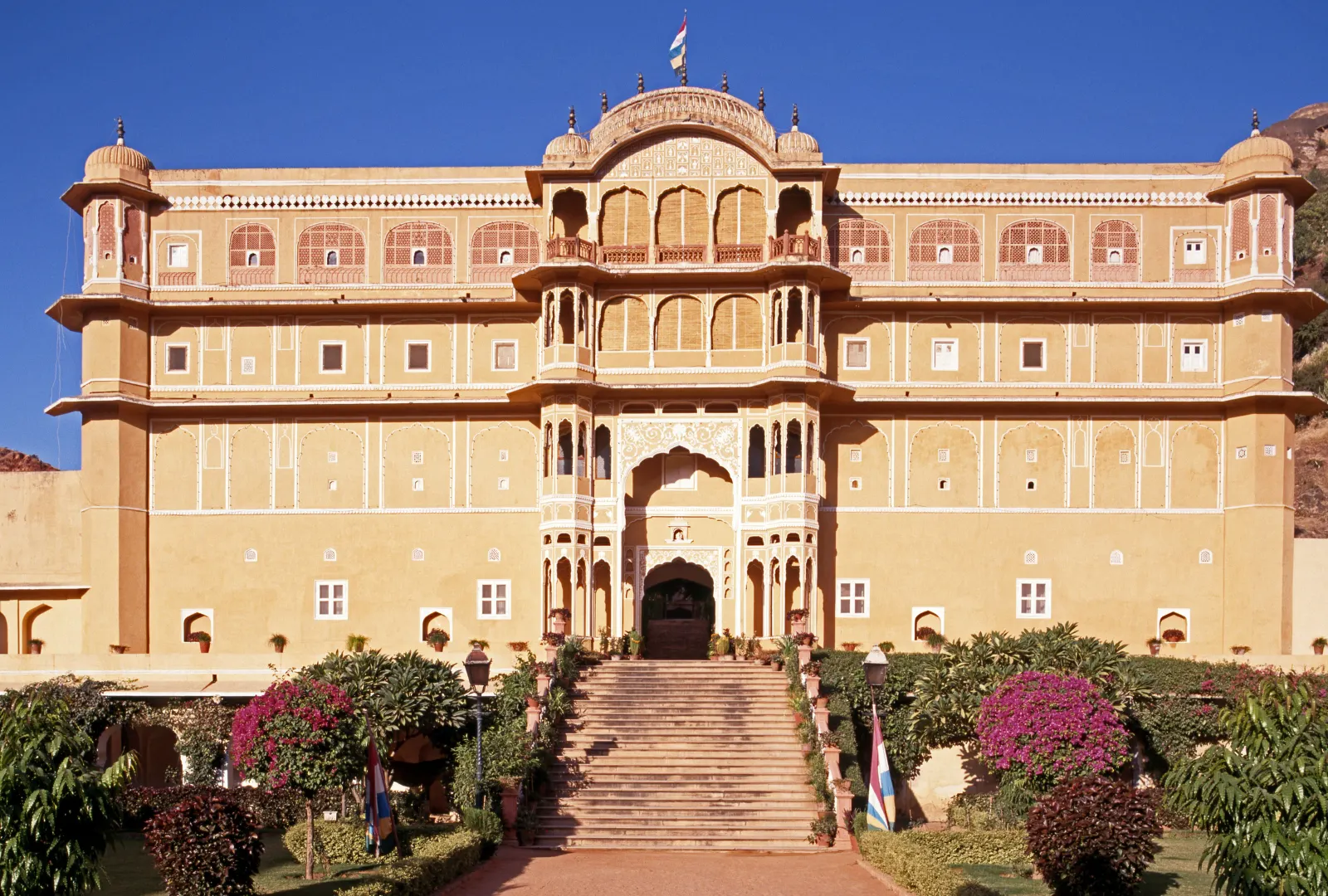
Samode Palace: worth the detour when the route needs a rural pause
Samode Palace sits in Samode village, roughly 45 kilometres from Jaipur. The property traces its origins to a 16th-century fort and later palace, with frescoes, mirror work and a Sheesh Mahal forming part of its identity.
Its value is geographical as much as architectural. Samode can work when the trip benefits from leaving Jaipur for a quieter night, particularly on a road journey between Delhi and Jaipur or before moving deeper into Rajasthan.
It is less useful when it creates an extra check-in for a traveller already short on time. The palace earns its place when the rural change of pace is part of the plan.
RAAS Devigarh: when the palace is interpreted through contemporary design
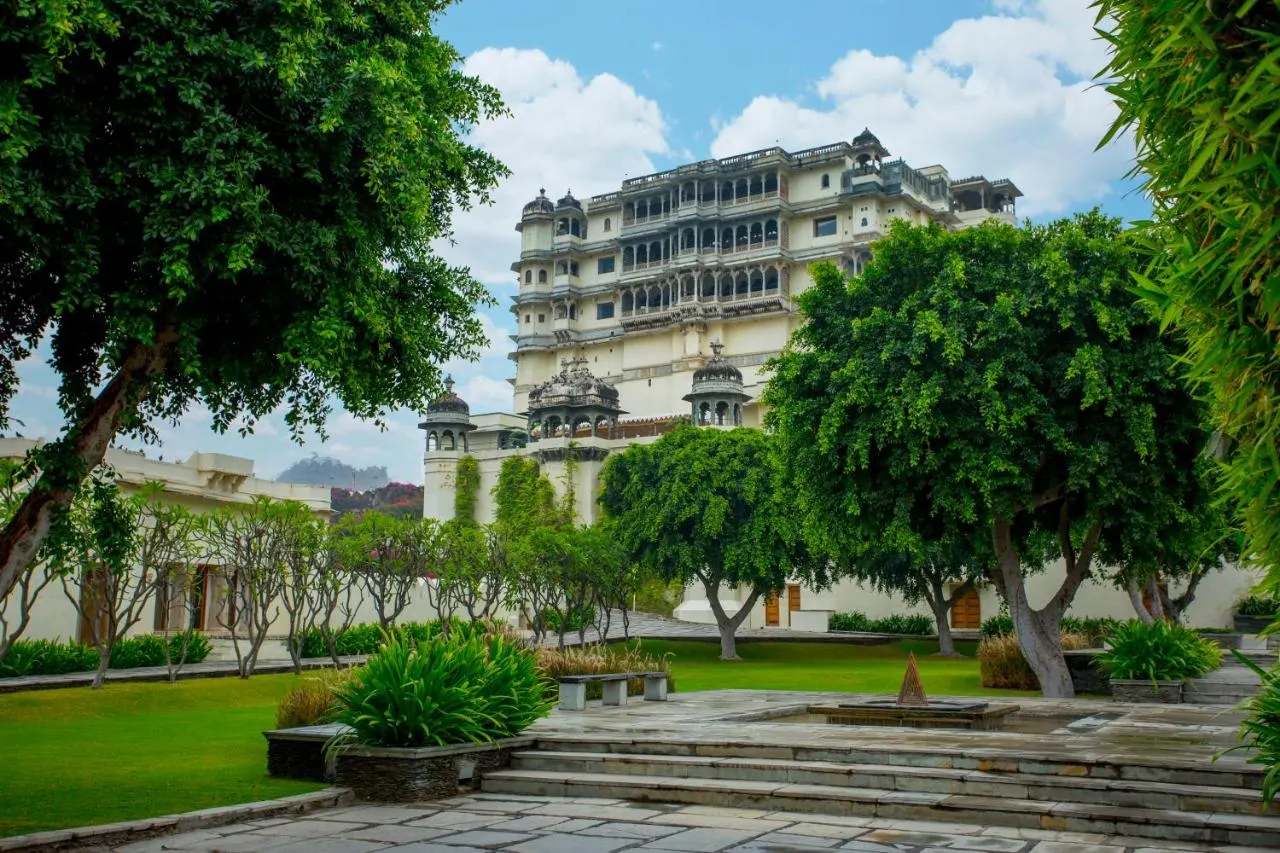
RAAS Devigarh is an 18th-century palace in the Aravalli Hills near Udaipur. The restoration pairs historic courtyards and palace architecture with restrained contemporary interiors rather than trying to recreate a conventional royal-hotel look.
That makes it a useful contrast on a longer Rajasthan trip. A traveller can experience a traditional palace elsewhere and use Devigarh for a more design-led rural stay.
Because the property sits outside central Udaipur, it should not be booked as though it were simply another Udaipur city hotel. It works best when the itinerary gives the location enough time and treats the stay as its own chapter.
Which palace hotel is best for a first Rajasthan trip?
For a first trip built around Jaipur, Jodhpur and Udaipur, we would not try to use the grandest palace in every city.
A strong combination might use one palace as the major hotel-led experience, one high-end property chosen for location, and one smaller heritage stay for contrast. For example, Taj Lake Palace in Udaipur can be the destination hotel while Jodhpur uses a more old-city-led property. Or Umaid Bhawan can be the major palace stay while Udaipur uses a lakeside hotel that suits the onward route better.
The point is contrast. Rajasthan becomes more interesting when the hotels do different jobs.
Palace hotel does not automatically mean the best room
Historic buildings create unusual room inventories. Two rooms in the same category can differ in layout, stairs, distance from the main areas, outlook and noise exposure.
For families, confirm connecting rooms rather than assuming they will be available. For older travellers, check lift access, shower design and the walk between the room, restaurant and vehicle. For couples, ask whether the category actually delivers the view or terrace that justified the upgrade.
A modern five-star can outperform a palace hotel on room consistency, bathroom design, soundproofing and accessibility. That is not a downgrade if those are the things the traveller will feel every day.
When is it better to visit a palace rather than sleep in it?
Not every famous hotel needs to be an overnight stay.
Lunch, dinner, high tea or a heritage visit can sometimes deliver the part of the property you care about without forcing the route to bend around the hotel. This works particularly well when the palace sits badly for the next day's drive or when the room premium is not important to the traveller.
The decision should be practical. If staying there improves the trip, stay. If visiting gives you the atmosphere without weakening the route, visit.
How many palace hotels should one Rajasthan trip include?
Usually fewer than the first draft itinerary suggests.
A Jaipur, Jodhpur and Udaipur circuit already gives plenty of architectural range. Add Jaisalmer, Ranthambore, Jawai or a rural palace only when that chapter earns the additional transfer.
Our Rajasthan in 10 Days guide uses the same principle: the route should stay coherent before extra stops are added.
If the trip already includes several destination hotels, one simpler but very well-located property can improve the overall rhythm.
How far ahead should you book?
The best-known palace hotels can become difficult long before the city itself is sold out. November through February, Christmas and New Year, major wedding dates and festival periods place pressure on suites and view-led categories.
If one property is non-negotiable, protect the room first and keep the more flexible hotel choices around it. If several hotels would work, keep the route fixed and compare the best available room rather than changing the journey to chase one famous name.
For October to March, we would normally start palace-hotel planning well ahead when exact room category matters.
The decision we would make
Taj Lake Palace is the clearest choice when Udaipur's lake setting is central to the stay. Umaid Bhawan is strongest when you want scale and a living royal residence. Rambagh works when Jaipur's royal history should continue into the hotel. Rajmahal gives Jaipur a smaller, more residential palace option. Samode and Devigarh make most sense when the route benefits from a deliberate rural pause.
None needs to appear simply because the trip is expensive.
A palace hotel should change the way you experience Rajasthan. If it does not, the money may be better spent on another night, a better room in the right place, stronger guiding or a different chapter of the journey.
Planning Rajasthan around its palace hotels? Tell us which properties interest you, how many nights you have and how you like to use your hotels. We can decide which stays deserve to shape the route and which are better kept as a meal, visit or future trip.
Good to know
Sources
- Taj Lake Palace official — https://www.tajhotels.com/en-in/hotels/taj-lake-palace-udaipur
- Umaid Bhawan Palace official — https://www.tajhotels.com/en-in/hotels/umaid-bhawan-palace-jodhpur
- Rambagh Palace official — https://www.tajhotels.com/en-in/hotels/rambagh-palace-jaipur
- Rajmahal Palace RAAS official — https://www.raashotels.com/rajmahal-palace/
- Samode Palace official — https://samode.com/samode-palace/
- RAAS Devigarh official — https://www.raashotels.com/devigarh/
- Farbound Rajasthan in 10 Days — https://www.farboundtravels.com/travel-guides/rajasthan-in-10-days-itinerary
Written by Mahim Tiwari.
Published October 2026
Keep reading
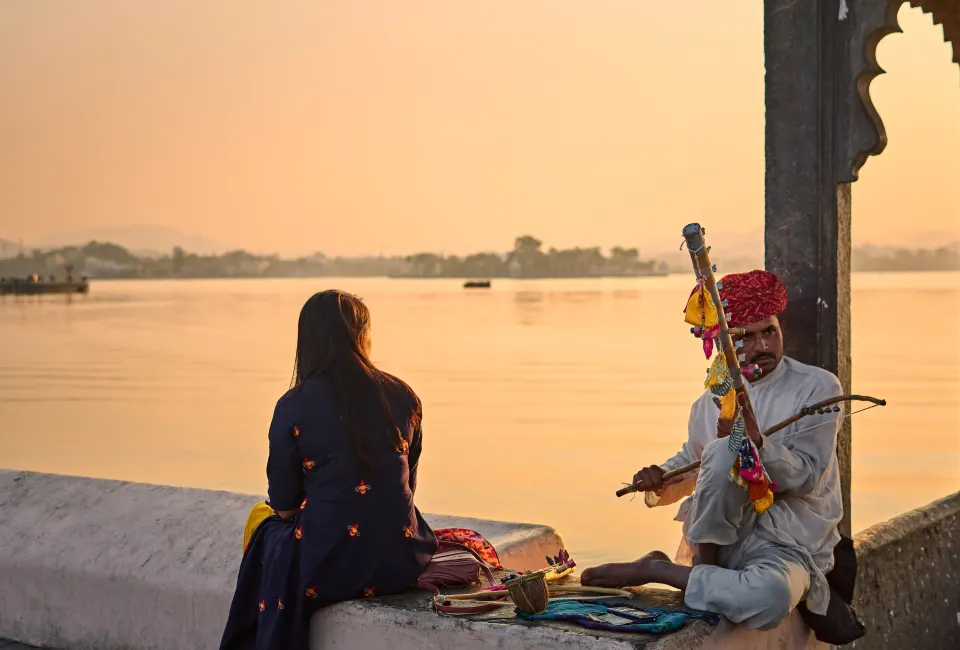
Rajasthan in 10 Days: What to Keep, What to Skip and the Route That Works
Ten days is enough for a strong Rajasthan route, but not for every palace city, desert stop and...
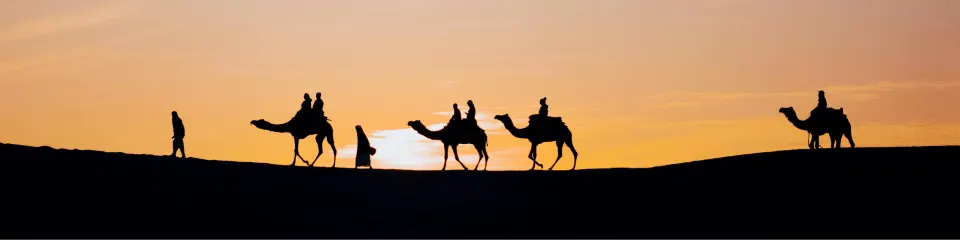
Jaisalmer Travel Guide: The Honest Guide to India's Golden City
Jaisalmer is the only city in India where a medieval fort is still a functioning town. This gui...