In short
Everest Base Camp is a lodge-based high-altitude trek, not a technical climb. Here is what first-time trekkers need to know about route, pace, altitude, permits, seasons, Lukla, porters and insurance.
At a glance
- Typical route
- Around two weeks from Lukla to Lukla
- Highest points
- Everest Base Camp about 5,400 m; Kala Patthar about 5,545 m
- Best windows
- March to May and October to November for most first-time trekkers
- Guide and TIMS
- Nepal Tourism Board currently lists EBC among routes requiring both
- Accommodation
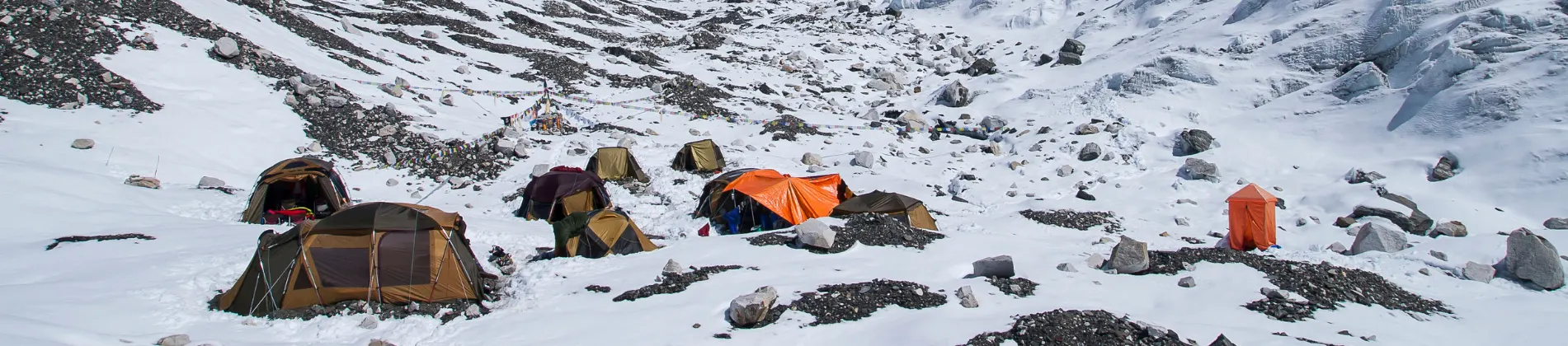
- Tea houses and lodges on the standard route
When to go
Very cold but often clear. Good for experienced winter trekkers who value quieter trails and are prepared for low temperatures.
Still cold, but often clear and less crowded than the main seasons. A viable late-winter option with proper cold-weather preparation.
Main spring trekking season begins. Visibility is often good, temperatures improve and the route becomes easier to recommend for first-timers.
Peak spring season. Generally stable conditions, busy trails and one of the strongest months for a first Everest Base Camp trek.
Still a strong trekking month, though the trail is busy and conditions become more changeable as the pre-monsoon period develops later in May.
A transition month. Early June can still work, but cloud, rain and flight disruption become more likely as the monsoon builds.
Monsoon affects the lower trail, mountain views are less reliable and Lukla flights can be more weather-sensitive. Not the easiest first-time choice.
Wet conditions continue on the lower route, with cloud and aviation disruption more likely. Better suited to travellers comfortable with monsoon trekking.
Conditions improve as the monsoon retreats. Early September can remain unsettled, while later weeks begin to feel more like autumn.
One of the strongest months for Everest Base Camp, with clearer skies, stable trekking conditions and high demand on flights and lodges.
Excellent post-monsoon visibility, crisp conditions and one of the most dependable months for the classic route.
Colder and quieter than autumn. Clear conditions are common, but winter temperatures and possible snow need to be taken seriously.
January: Reliable — Very cold but often clear. Good for experienced winter trekkers who value quieter trails and are prepared for low temperatures.
February: Reliable — Still cold, but often clear and less crowded than the main seasons. A viable late-winter option with proper cold-weather preparation.
March: Best time — Main spring trekking season begins. Visibility is often good, temperatures improve and the route becomes easier to recommend for first-timers.
April: Best time — Peak spring season. Generally stable conditions, busy trails and one of the strongest months for a first Everest Base Camp trek.
May: Best time — Still a strong trekking month, though the trail is busy and conditions become more changeable as the pre-monsoon period develops later in May.
June: Shoulder — A transition month. Early June can still work, but cloud, rain and flight disruption become more likely as the monsoon builds.
July: Off-season — Monsoon affects the lower trail, mountain views are less reliable and Lukla flights can be more weather-sensitive. Not the easiest first-time choice.
August: Off-season — Wet conditions continue on the lower route, with cloud and aviation disruption more likely. Better suited to travellers comfortable with monsoon trekking.
September: Shoulder — Conditions improve as the monsoon retreats. Early September can remain unsettled, while later weeks begin to feel more like autumn.
October: Best time — One of the strongest months for Everest Base Camp, with clearer skies, stable trekking conditions and high demand on flights and lodges.
November: Best time — Excellent post-monsoon visibility, crisp conditions and one of the most dependable months for the classic route.
December: Reliable — Colder and quieter than autumn. Clear conditions are common, but winter temperatures and possible snow need to be taken seriously.
Everest Base Camp is not a climb of Everest. It is a high-altitude trek through Nepal's Khumbu region, usually taking around two weeks from Lukla and reaching about 5,400 metres.
The route is established and lodge-based, but it is still a serious trek. Altitude, repeated walking days, cold and mountain weather matter more than people often expect.
The real question is not whether the trail is famous or achievable. It is whether the itinerary gives your body enough time to get there safely.
What the standard Everest Base Camp trek actually looks like
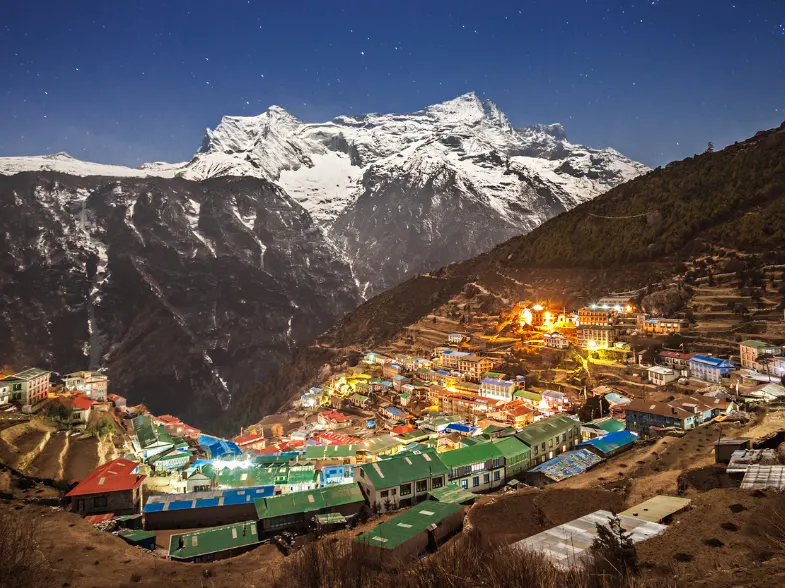
Most classic itineraries begin with a flight to Lukla. From there, the trail follows the Dudh Koshi valley through Phakding or Monjo before climbing towards Namche Bazaar, the main settlement and one of the most important acclimatisation stops in the Khumbu.
After Namche, the route normally continues through the Tengboche area, then higher towards Pangboche and Dingboche or Pheriche. From there, trekkers move towards Lobuche and finally Gorak Shep, the last settlement before Everest Base Camp.
Nepal Tourism Board describes the classic journey as roughly a two-week Lukla-to-Lukla trek. That matters because the route needs time for altitude, not because the mileage looks extreme on a map.
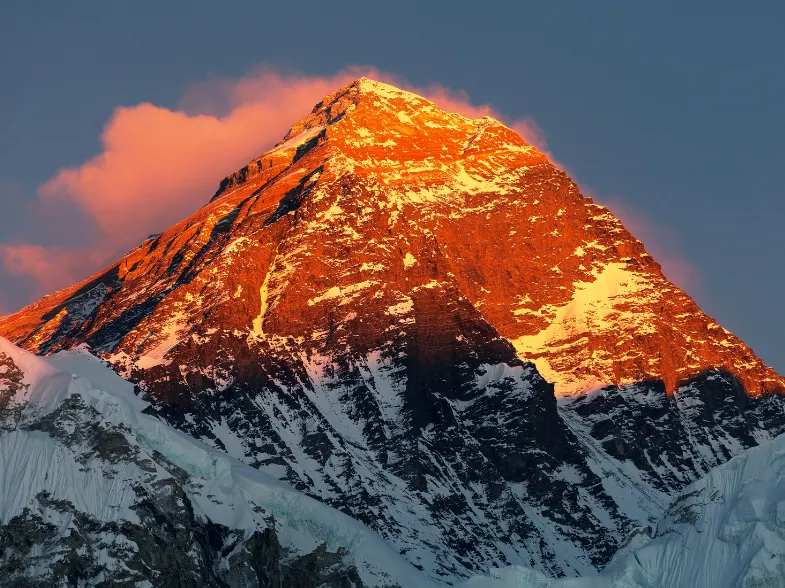
Base Camp itself is also not the classic viewpoint for Everest. Kala Patthar, above Gorak Shep, is the better-known viewpoint and is often included separately. Nepal Tourism Board lists Kala Patthar at about 5,545 metres. A sensible itinerary treats the Base Camp walk and the Kala Patthar ascent as two separate high-altitude efforts rather than forcing both into one long day.
For most people, the standard trekking day falls somewhere around four to seven hours of walking. Some days are shorter, while upper-route days can feel much harder than their distance suggests because of altitude, cold and rougher terrain.
Can a beginner do Everest Base Camp?
Yes, many people make Everest Base Camp their first serious high-altitude trek. But "first-timer" should not mean unprepared.
You do not need mountaineering skills for the standard route. There are no technical climbing sections on the normal trail to Base Camp. You do need enough aerobic fitness and leg strength to walk for several hours on consecutive days, including sustained climbs and descents.
What usually surprises people is not one exceptionally hard day. It is the accumulation of effort over nearly two weeks, especially once sleeping altitude rises above 4,000 metres.
Training should resemble the trip. Regular hill walking, stairs, long walks on consecutive days and carrying the daypack you expect to use are more useful than relying on occasional hard gym sessions.
If you already enjoy full-day hikes and can recover well enough to walk again the next morning, you have a much better starting point than someone judging readiness only from general fitness.
The real difficulty is altitude, not technical climbing
Everest Base Camp sits at approximately 5,400 metres, and by the time you reach the upper Khumbu you are sleeping and walking for several days above 4,000 metres.
Fitness helps with the walking. It does not make anyone immune to altitude illness. Current CDC guidance is clear that physical fitness does not predict who will acclimatise well. Rate of ascent and individual response matter much more.
That is why acclimatisation days are part of the route rather than spare days. Nepal Tourism Board recommends time around Namche before continuing higher, and another acclimatisation stop around Dingboche or Pheriche. These pauses give your body time to adjust while still allowing a useful walk during the day.
A headache, nausea, unusual fatigue or loss of appetite after gaining altitude deserves attention. If symptoms worsen while resting at the same altitude, the sensible response is to stop ascending, seek advice and be prepared to descend. Himalayan Rescue Association guidance is equally clear on this point: worsening symptoms should not be pushed through.
A faster itinerary is not better planning. Removing acclimatisation nights may save time on paper, but it changes the margin the route gives your body.
How many days should a first-timer allow?
Think about the full Nepal trip, not only the trekking days.
For the classic Lukla to Base Camp and back route, around two weeks is a sensible reference point. That gives room for the normal sequence of overnight stops, acclimatisation around Namche and again higher up, the Base Camp day, Kala Patthar if conditions and the traveller permit it, and the return to Lukla.
Keep time in Kathmandu before the trek for briefing, equipment checks and any final arrangements. It is also wise to leave a buffer after the trek before an international flight home.
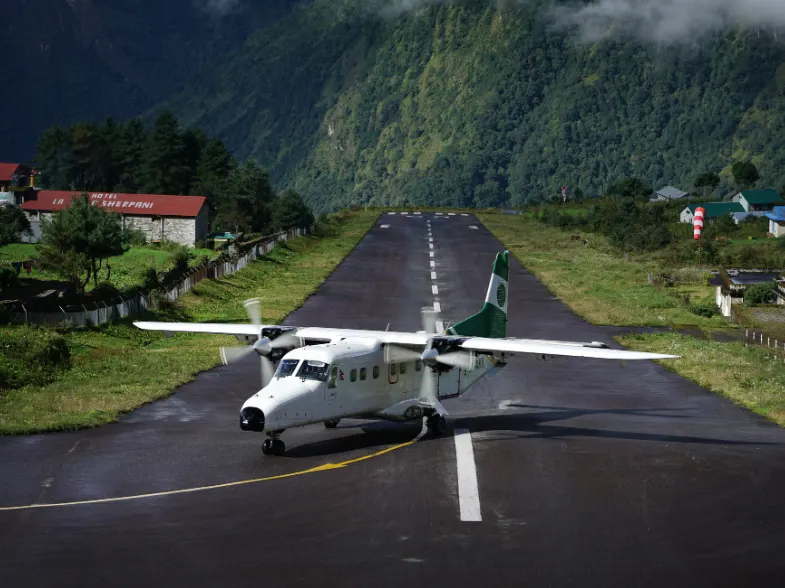
Lukla is a mountain airport, so weather and visibility can affect flights. A delay is manageable when the itinerary has margin. It becomes much more serious if your long-haul departure is booked immediately afterwards.
The better question is therefore not, "How quickly can I do Everest Base Camp?" It is, "How much time gives me a realistic route, proper acclimatisation and room for mountain logistics?"
When to go: spring and autumn are the clearest choices
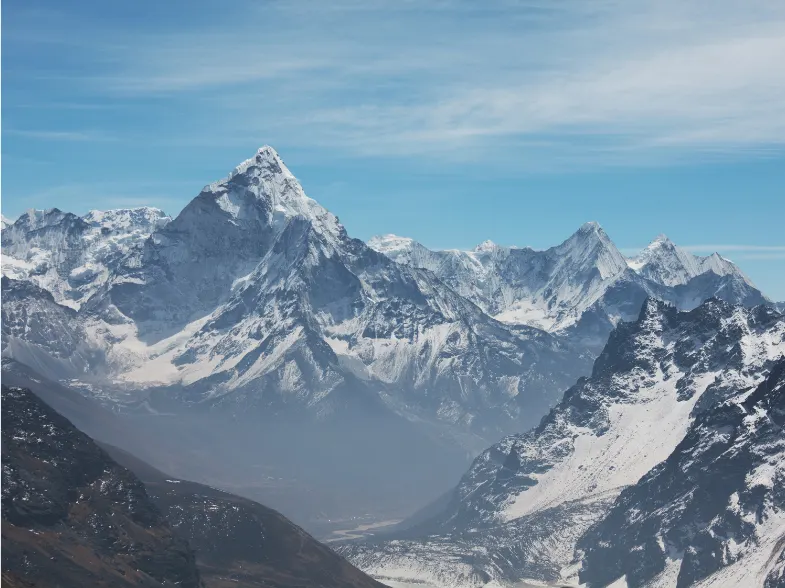
Nepal Tourism Board identifies March to May and October to November as the strongest seasons for the Everest region. For most first-time trekkers, those are the simplest months to recommend.
Autumn follows the monsoon and usually brings clearer skies, especially in October and November. Spring is warmer than winter and is also a major trekking and climbing season. Both periods are popular, so flights, lodges and the trail itself can be busy.
Winter trekking is possible. December, January and February can bring clear days and quieter trails, but the trade-off is much colder conditions, particularly above Namche, with shorter daylight and a greater chance of snow affecting the upper route.
June to August is the least straightforward period for a first EBC trek. Monsoon rain affects the lower trail, cloud can obscure mountain views and mountain aviation becomes less predictable.
September is transitional. Conditions often improve as the monsoon retreats, but early September can still behave more like summer than autumn.
Do not choose the month from a Kathmandu weather chart. Conditions at 3,500 to 5,500 metres are a different proposition from the valley.
Guides, TIMS and the permits you actually need
Permit rules in Nepal have changed over time, so old forum posts can be misleading.
As of 17 September 2026, Nepal Tourism Board lists the Everest Base Camp trek among routes where a licensed trekking guide and a trekking-agency-issued TIMS card are required. The current published TIMS fee is NPR 2,000 for travellers from outside SAARC countries and NPR 1,000 for SAARC nationals.
You also enter Sagarmatha National Park. Nepal Tourism Board currently lists the park entry fee as NPR 3,000 for foreign nationals and NPR 1,500 for SAARC nationals.
Khumbu Pasang Lhamu Rural Municipality also operates a Trek-Card tourism fee. Its current public service page lists NPR 3,000 for travellers from countries outside SAARC and China, and NPR 2,000 for SAARC and Chinese nationals.
These details should be checked again before travel. A registered trekking agency should confirm what applies to your exact route, arrange the TIMS process and make sure the paperwork is in place before the trek begins.
For a first visit, the practical point is simple: do not build the trip around outdated advice that says everything can be sorted informally after reaching Lukla.
Do you need a porter?
A guide and a porter do different jobs. The guide manages the route, pace, communication, changing conditions and day-to-day decisions. A porter carries part of the luggage.
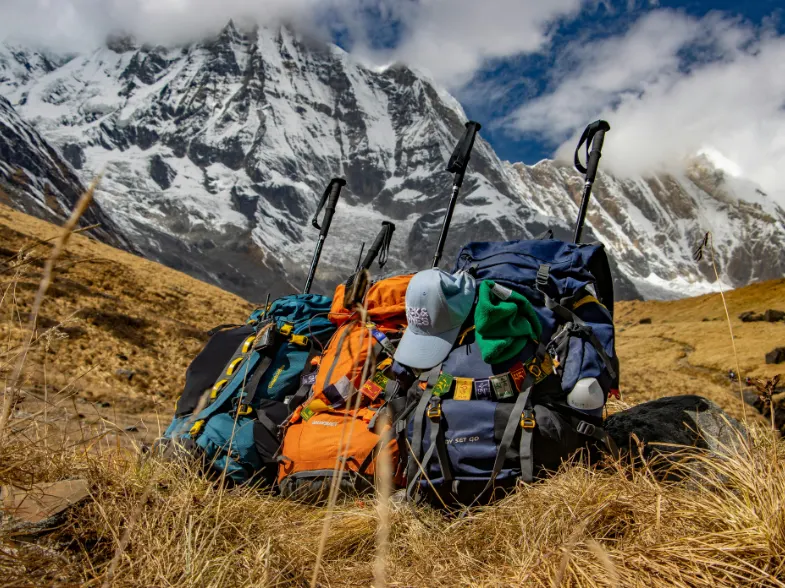
You can carry your own trekking bag if you are used to multi-day walking with weight, but doing so changes the physical demand of a two-week trek. Many travellers prefer to walk with a lighter daypack and use porter support for the main bag.
This is not about avoiding effort. It is about deciding where you want that effort to go. At altitude, carrying less weight can leave more energy for the walking itself and make recovery between days easier.
If you use porter support, confirm the baggage allowance, how bags are shared, what you carry yourself each day and how the porter team is equipped and paid.
Lukla, tea houses and what daily life on the trek is really like
For most travellers, Lukla is the gateway to the route. The short mountain flight is part of the experience, but it also introduces uncertainty into the schedule. Weather and visibility can affect operations, which is another reason not to treat every connection as guaranteed.
Once on the trail, the standard EBC route is lodge-based. Nepal Tourism Board notes that lodges and tea houses are available throughout the Everest region.
Comfort changes as you climb. Namche has a much broader range of accommodation and services than the small settlements higher up. By Lobuche and Gorak Shep, the expectation should be simple, functional mountain lodging.
Rooms are generally basic. Heating is usually concentrated in common areas rather than bedrooms. Hot showers, device charging and Wi-Fi may be limited, unreliable or charged separately, especially higher on the route. Meal choice also narrows as supplies have farther to travel.
Daily life becomes repetitive in a useful way: walk, eat, hydrate, rest, check how everyone is responding to altitude and prepare for the next day. A good guide matters here because the job is not only route-finding. It is also pace, communication with lodges, changing weather and recognising when the plan needs to slow down.
Training, packing and insurance
You do not need to train like a mountaineer, but you should arrive able to walk comfortably for several hours on consecutive days.
Pack around layers rather than one heavy outer layer. The same day can move from sun to wind and cold quickly. A warm insulated layer, waterproof shell, gloves, hat, sun protection, broken-in walking boots, a reusable water system, personal medication and a practical daypack form the core.
Trekking poles are worth considering, particularly for long descents. High-altitude sun exposure is also stronger than many people expect, so sunglasses, sunscreen and lip protection deserve the same attention as warm clothing.
Travel insurance needs to be checked carefully. Do not assume a standard holiday policy covers trekking at Everest Base Camp altitude. The policy should explicitly cover trekking to the elevations in your itinerary and emergency medical evacuation, including helicopter evacuation where medically necessary.
Read the altitude limit and exclusions instead of relying on the policy name. If you have a medical condition, take regular medication, have previously had difficulty at altitude or are considering altitude medication, speak to a doctor or travel-medicine clinician before departure.
Who Everest Base Camp is right for
Everest Base Camp works best for someone who wants the journey itself, not simply a photograph beside the Base Camp marker.
You should be comfortable with around two weeks of walking, simpler accommodation as you climb, cold mornings and evenings, repeated packing and unpacking, and the possibility that weather or acclimatisation changes the plan.
In return, the route gives you much more than one destination. Namche, Sherpa settlements, Tengboche, the Dudh Koshi valley, the transition into the high Himalaya and the rhythm of moving on foot are what make the trip coherent.
If your main priority is seeing Everest but you do not want a two-week high-altitude trek, a shorter Everest-region itinerary may make more sense. If you want a serious trek but are deciding between different mountain regions, compare the walking style, altitude profile and landscape rather than choosing only by the most famous name.
Everest Base Camp is achievable for many first-time trekkers. It is not something to rush. The strongest plan is the one that gives the mountain, the weather and your own acclimatisation enough room to influence the itinerary.
Planning Everest Base Camp? We can help you decide whether it fits the trip, how much time to allow and what level of support makes sense.
Good to know
Sources
- Nepal Tourism Board — Everest region seasons, route and accommodation
- Nepal Tourism Board — TIMS Card requirements and current fees
- Nepal Tourism Board — Sagarmatha National Park entry fees
- Khumbu Pasang Lhamu Rural Municipality — Trek-Card tourism fee
- CDC Yellow Book 2026 — High-altitude travel and acclimatisation
- Himalayan Rescue Association Nepal — Altitude illness guidance
Written by Farbound Curation Team.
Published September 2026
Keep reading
Kathmandu Before the Mountains: Why the Valley Deserves Time
Kathmandu Valley is not only a gateway to Nepal’s mountains. Its temples, courtyards, stupas, c...
Best Time to Visit Nepal in 2026: A Straight Answer for Different Trips
October and November is the answer most Nepal articles give. It is correct, and incomplete. The...