
In short
A good private journey is not slow or fast by default. It is paced around the traveller, the route, the season, the terrain and the purpose of the trip.
At a glance
- Good pacing
- Enough movement to feel complete without constant recovery from the last transfer
- Map distance
- South Asia cannot be paced by distance alone because terrain, altitude, weather and traffic change the day
- Slow places
- Some destinations lose value when compressed into tightly stacked visits
- Traveller fit
- Families, repeat travellers and older travellers can need different day lengths, meal timing and hotel-change frequency
How We Decide the Right Pace for a Private Journey
A private journey usually succeeds or fails in the parts that do not look important on a document.
The visible parts are the hotels, monuments, flights, guides, meals and places covered. The quieter parts are the ones that shape the actual experience: how early the day starts, how long the drive feels, whether the guest reaches the hotel before dark, whether there is enough time with the guide, whether meals are properly placed, and whether the traveller has the energy to care about the next stop.
This is where pacing matters.
A good journey is not slow or fast by default. Some trips should move with rhythm and purpose. Some need more time in fewer places. Some travellers want fuller days, and some will enjoy the journey more if the route breathes. The work is not to make every itinerary relaxed. The work is to know what the right pace is for that traveller, in that region, in that season.
For Farbound, pacing is one of the main parts of trip design. It is where route knowledge, hotel judgement, guide quality and ground handling come together.
What does good pacing actually mean?
Good pacing means that the journey has enough movement to feel complete, but not so much movement that the traveller is always recovering from the last transfer.
It means the important places are given proper time. It means long drives are not hidden inside attractive descriptions. It means early starts are used when they improve the day, not because the itinerary is overloaded. It means beautiful hotels are not treated only as places to sleep. It means the traveller is not asked to absorb a major city, a major monument, a long drive and a late check-in on the same day unless there is a strong reason.
Pacing is not about doing less. It is about doing the right amount properly.
A full trip can be excellent. An overpacked trip usually becomes weaker each day. The difference is not always obvious in a proposal, but it becomes clear on the ground.
Why can a good itinerary on paper feel wrong on the ground?
An itinerary can look impressive because it covers more names. Five cities in nine days can look richer than three cities in nine days. More monuments can look like better value. More inclusions can look like stronger planning.
On the ground, the same plan may feel very different.
A hotel change is not only a hotel change. It means packing, settling bills, meeting the driver, loading bags, driving, stopping for meals, reaching the next hotel, checking in, waiting for luggage, and adjusting to a new room. A domestic flight is not only the flight time. It includes airport transfers, security, baggage, possible delays and the loss of a large part of the day.
The problem is not movement. Movement is often necessary and can be enjoyable when the route is well designed. The problem is pretending that movement does not cost energy.
A private journey should not be judged only by how many places it includes. It should be judged by whether the traveller can experience those places with attention, comfort and context.
How do terrain, transfers and hotel changes affect the journey?
South Asia cannot be paced only by distance on a map.
A four-hour drive on a good highway is different from a four-hour drive in the hills. A short sector in the Himalaya can take longer than expected because of road conditions, altitude, weather or traffic. A drive in Rajasthan may be comfortable if the route is clean and the stops are planned well. A coastal route in Sri Lanka may look simple, but hotel access, local traffic and the order of stops still matter.
Transfers affect the body of the trip. Too many of them turn the journey into a chain of departures and arrivals. The traveller starts thinking about luggage, check-in time and the next early start instead of the place they came to see.
Hotel changes need the same judgement. Some trips need several bases because the geography demands it. In other cases, it is better to stay longer in one place and use it intelligently. A strong hotel base can improve the trip by reducing friction, giving the traveller better rest and allowing the guide to build the day around timing rather than constant relocation.
This is why pacing is not a decorative part of planning. It is operational.
Why do some places need slower days?
Some places lose value when they are rushed.
Varanasi needs space because the city is intense. The river, lanes, rituals, crowds and sound all require a slower rhythm. A traveller can visit Varanasi quickly, but a better visit usually needs time for early morning, evening, rest and context.
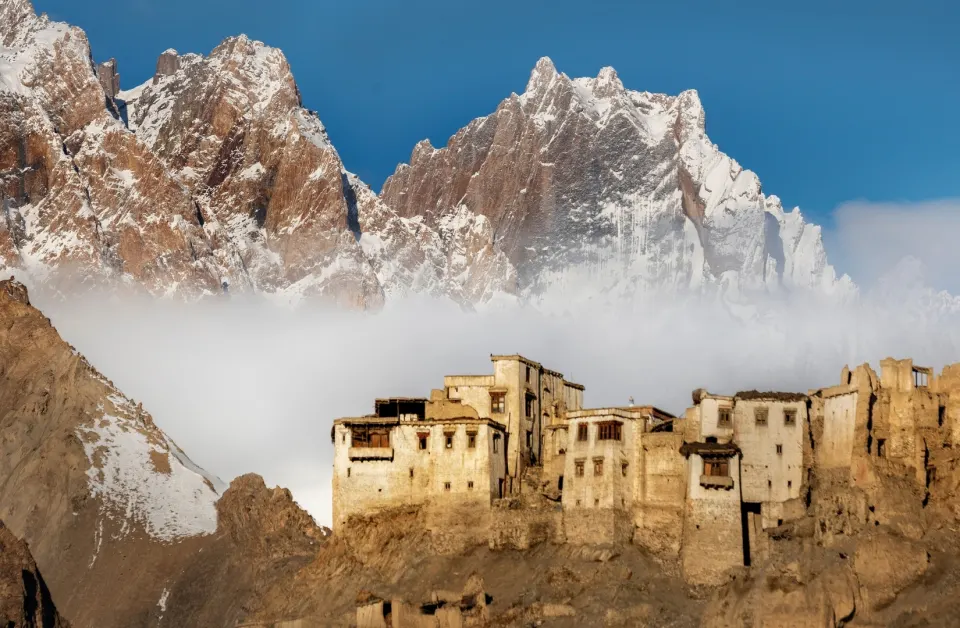
Ladakh needs space because altitude changes everything. Even fit travellers need acclimatisation. A route that ignores altitude is not ambitious. It is careless.
Bhutan needs space because the country is not built for aggressive sightseeing. The experience sits in the valleys, monasteries, drives, conversations, hotel rhythm and restraint. It should not be treated like a checklist.
Sri Lanka’s tea country also needs a slower hand. The value is not only in seeing a plantation or taking a train. It is in the weather, light, estate walks, meals, views and the quieter pace of the hills.
Wildlife areas need their own timing. Safari days begin early. Drives can be dusty, hot or bumpy. Sightings are not guaranteed, and the best experience often depends on patience. Adding too much before or after a safari can weaken the whole day.
Rajasthan can often carry a fuller rhythm, especially on a first-time route, but even there the design matters. Jaipur, Jodhpur, Udaipur and Jaisalmer should not be stitched together only because they sit in the same state. The drive pattern, hotel quality, guiding plan and season decide whether the route feels rich or tiring.
How does the traveller change the pace?
The same route does not suit every traveller.
A couple on a first private journey to India may need more orientation than a repeat traveller. A family with children needs different day lengths, meal timing and downtime. Older travellers may be comfortable with full days if the starts, vehicles, guides and hotels are right, but they may not enjoy constant packing and late arrivals. A photographer may want slower mornings and longer waits for light. A food-led traveller may care more about meal placement than another monument. A wildlife guest may accept early starts if the safari plan is worth it.
School and university groups need another kind of pacing. Their trips should carry learning, safety, supervision and movement without exhausting the group or losing control of the day.
This is why Farbound does not use one pacing formula. The right plan depends on who is travelling, why they are travelling, and what the trip needs to deliver.
Where does luxury fit into pacing?
Luxury is not only the hotel category.
It is also the ability to enjoy the hotel. It is arriving before the evening is lost. It is not rushing breakfast every morning. It is having enough time with a good guide. It is knowing when to start early and when not to. It is having meals planned properly. It is choosing a route where the traveller is not always tired before the best part of the day begins.
A beautiful hotel has little value if the guest checks in late and leaves early. A strong guide has less impact if the day is too crowded for conversation. A good restaurant is wasted if it is placed after a draining transfer. A major monument is weaker when the traveller reaches it at the wrong time, in the wrong heat, or after too many consecutive heavy days.
Good pacing protects the quality of everything else in the journey.
What does Farbound look for before finalising a route?
Before finalising a private journey, Farbound looks at the route as it will be experienced, not only as it will be displayed.
The main checks are simple.
Does the arrival day make sense after the flight? Are there too many hotel changes? Are the drives honest? Is the first major sightseeing day too heavy? Is the route suitable for the season? Does the traveller have enough time in the places that matter most? Are we using early starts because they improve the experience, or because the itinerary is too full? Is the hotel being used properly, or only as a sleeping stop? Is there room for weather, traffic, local rhythm and human energy?
The aim is not to remove ambition from the journey. The aim is to make the ambition work.
A private trip across India, Nepal, Bhutan or Sri Lanka should feel considered from the first transfer to the final departure. The traveller should not feel that every day is a negotiation between what was promised and what is physically comfortable.
The right pace is the one that lets the journey hold together. It gives each place enough room, each transfer enough honesty, each hotel enough purpose and each traveller enough energy to experience what they came for.
Good to know
Sources
- Farbound Travels — title, excerpt and guide content supplied in this row
Written by Mahim Tiwari.
Published June 2026 · Last updated September 2026
Keep reading

Best Palace Hotels in Rajasthan: Which Ones Are Worth Building a Trip Around?
Rajasthan has palace hotels that can justify changing the route or adding another night. Here i...
Best Tiger Safari in India: Ranthambore, Bandhavgarh, Kanha, Pench or Tadoba?
The best tiger safari in India depends on route, season and how many drives you can give it. Co...