In short
Two full days in Varanasi is enough for a dawn boat, the old city, evening Ganga Aarti and Sarnath, if the route protects the right hours of the day.
At a glance
- Best structure
- Arrive the evening before if possible, then protect two full days
- Day 1
- Dawn river + old city + evening Ganga Aarti
- Day 2
- Sarnath + one deeper cultural interest
- Best general season
- October to March
- Hotel choice
- Riverfront access versus easier vehicle access is a real trade-off
- Wider route
- Treat Varanasi as a deliberate eastern chapter, not a drive-by Golden Triangle add-on
When to go
Cool mornings and comfortable walking weather. River fog is possible at dawn, which can affect visibility but not the city's appeal.
One of the easiest months for a first visit, with cool mornings, pleasant days and good conditions for walking the ghats and old city.
Early March is strong, but temperatures rise quickly later in the month. Start river and old-city walks early.
Hotter afternoons make a two-day visit more tiring. Keep the ghats and old city for early morning and late afternoon.
Very hot, with official climate data showing upper temperatures above 45°C. Not the easiest month for a first visit.
Heat remains intense and humidity builds before the monsoon settles in. Outdoor time needs careful pacing.
Monsoon brings humidity, rain and a higher river level. The city remains active, but walking and boating can be weather-dependent.
Warm, humid and wet. River conditions and rain can affect boat plans, so keep more flexibility in the two-day schedule.
Conditions improve gradually as the monsoon retreats, though early September can still be humid and warm.
The cooler season returns and walking becomes easier. Later October is especially good for a first visit.
Excellent weather and one of the city's major festival periods. Dev Deepawali can transform the ghats but also brings very heavy demand.
Cool mornings and comfortable days make December a strong month. Peak holiday dates can increase hotel demand.
January: Best time — Cool mornings and comfortable walking weather. River fog is possible at dawn, which can affect visibility but not the city's appeal.
February: Best time — One of the easiest months for a first visit, with cool mornings, pleasant days and good conditions for walking the ghats and old city.
March: Best time — Early March is strong, but temperatures rise quickly later in the month. Start river and old-city walks early.
April: Shoulder — Hotter afternoons make a two-day visit more tiring. Keep the ghats and old city for early morning and late afternoon.
May: Off-season — Very hot, with official climate data showing upper temperatures above 45°C. Not the easiest month for a first visit.
June: Off-season — Heat remains intense and humidity builds before the monsoon settles in. Outdoor time needs careful pacing.
July: Off-season — Monsoon brings humidity, rain and a higher river level. The city remains active, but walking and boating can be weather-dependent.
August: Off-season — Warm, humid and wet. River conditions and rain can affect boat plans, so keep more flexibility in the two-day schedule.
September: Shoulder — Conditions improve gradually as the monsoon retreats, though early September can still be humid and warm.
October: Best time — The cooler season returns and walking becomes easier. Later October is especially good for a first visit.
November: Best time — Excellent weather and one of the city's major festival periods. Dev Deepawali can transform the ghats but also brings very heavy demand.
December: Best time — Cool mornings and comfortable days make December a strong month. Peak holiday dates can increase hotel demand.
Two full days in Varanasi won't cover every temple, ghat, market and Buddhist site. You shouldn't try. What two days can do is show you why the city deserves a place on a first India trip, as long as you see the river at two different times of day, walk the old city, and keep half a day free for Sarnath.
Before you start: make sure the first sunrise counts
This plan only works if you wake up in Varanasi on Day 1. Land late that day and your "two days" shrink to one full day with a transfer at each end. That's still worth doing, but it's a different trip.
So we've assumed you arrive the night before Day 1 and leave after Day 2, or the morning after. That gives you a dawn on the Ganga, an evening aarti, a proper walk through the old city, and enough time at Sarnath to do it justice instead of squeezing it between airport runs.
Day 1, early morning: the river first
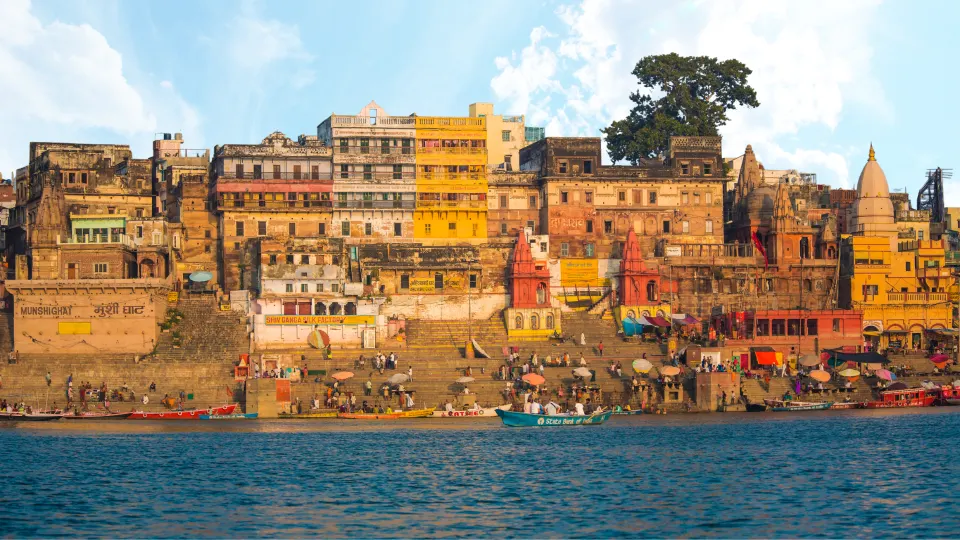
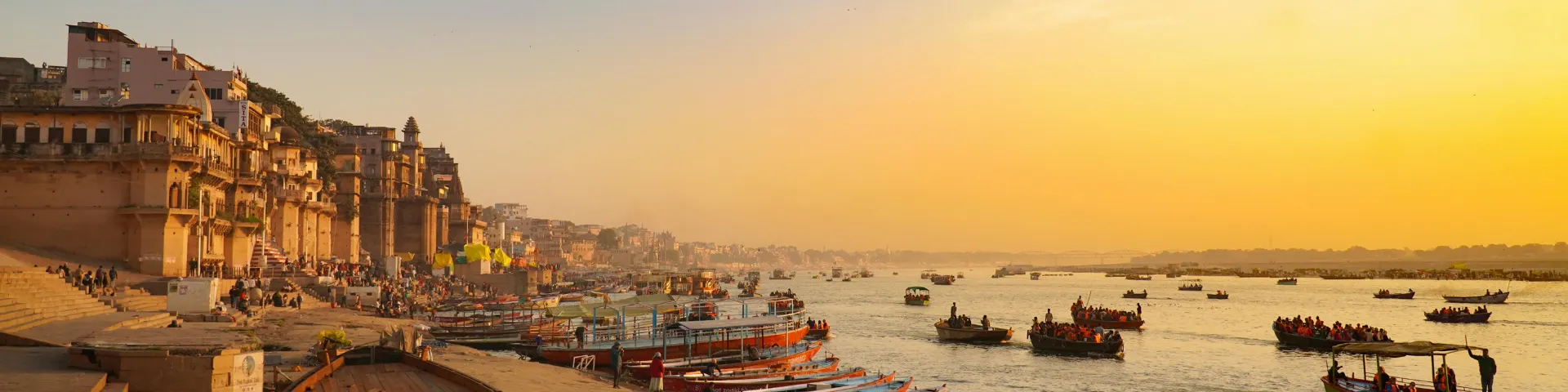
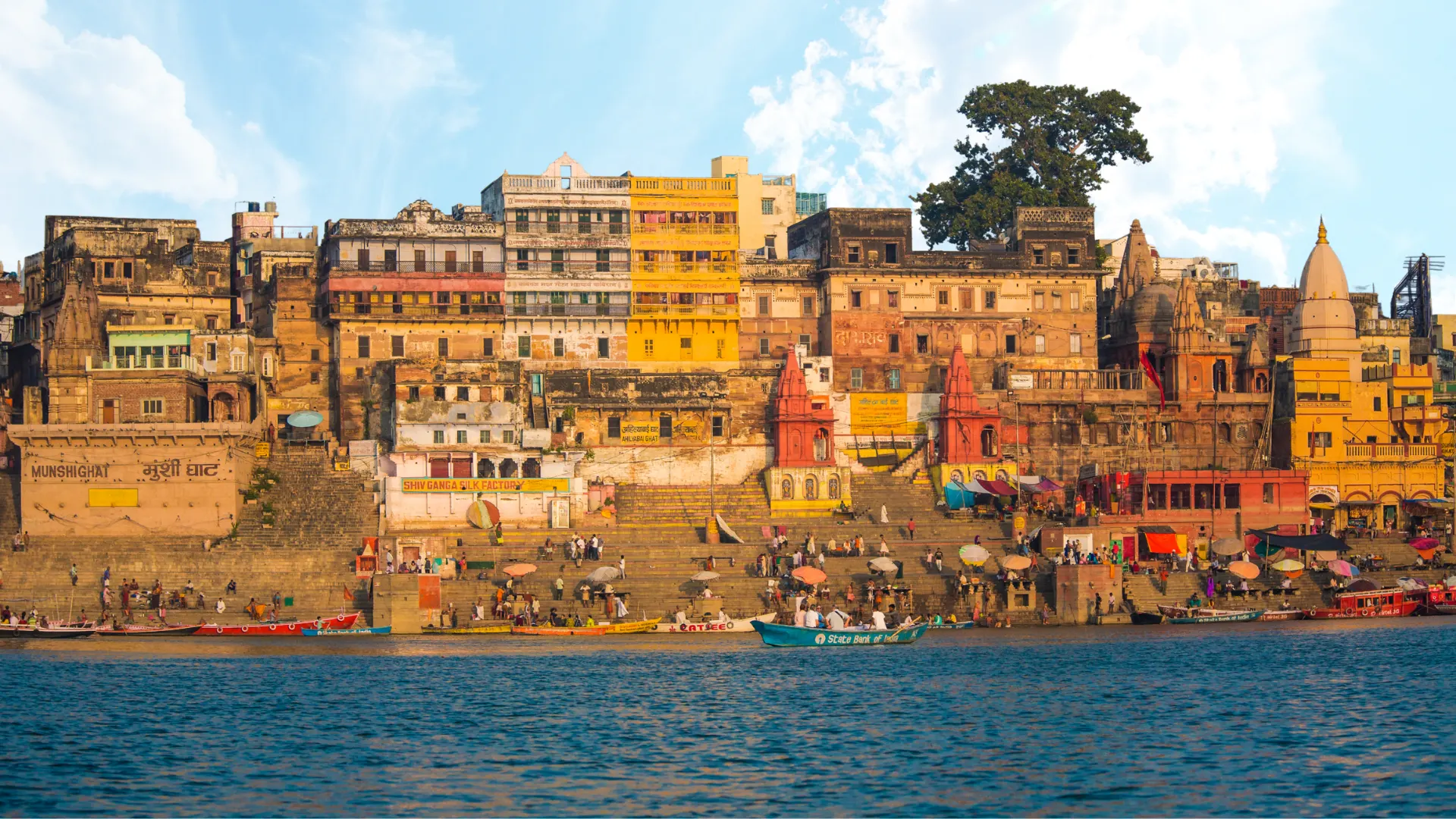
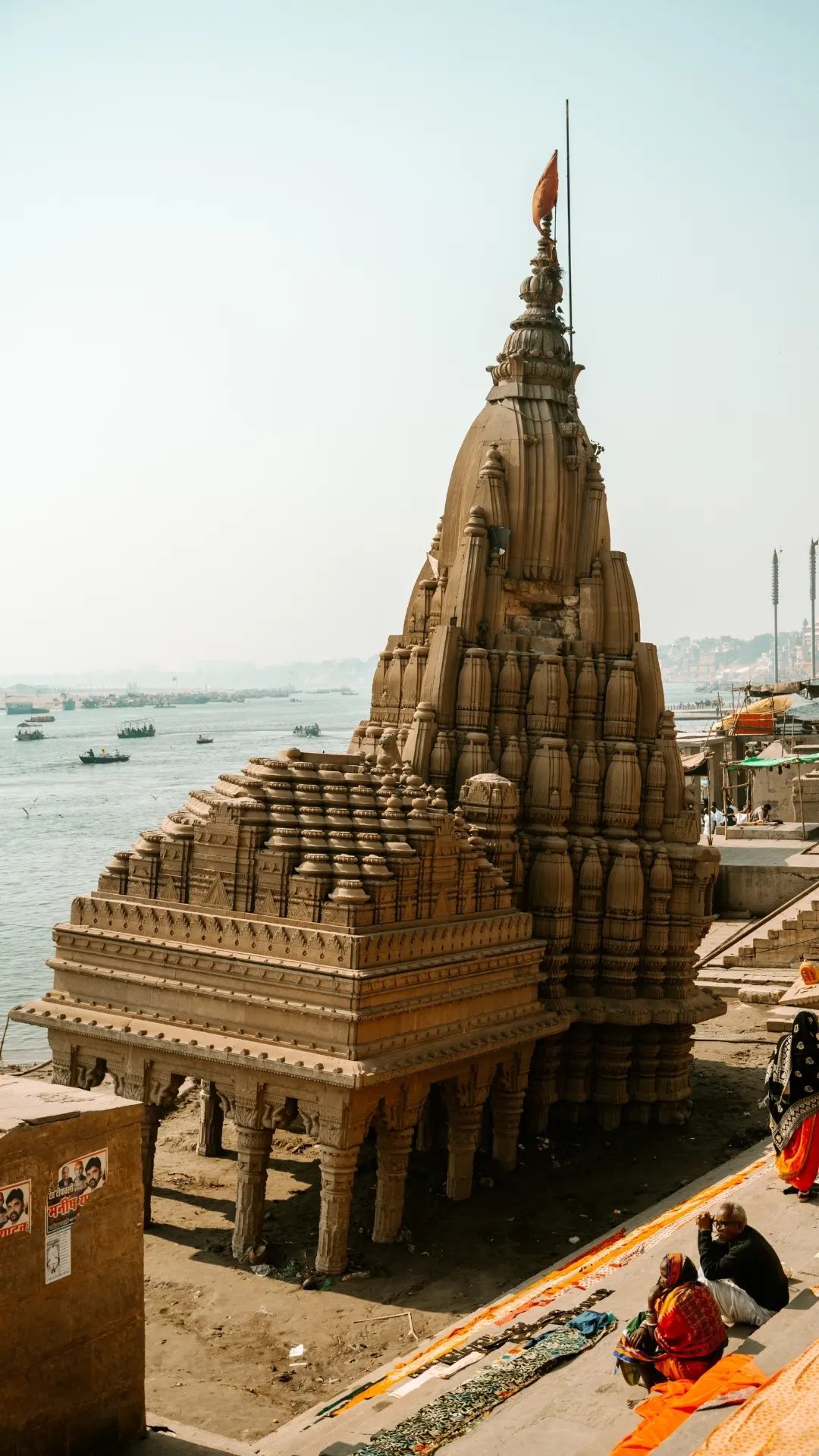
The city makes sense from the water before it makes sense on a map. Take a private boat along the ghats around sunrise. Incredible India's own guidance recommends the dawn boat ride as one of the best ways to understand the riverfront, with priests at prayer, residents bathing and the ghats coming into view.
There's no prize for counting ghats. What you're really seeing is one long stretch of riverbank where daily life and worship happen side by side.
Manikarnika is a working cremation ghat, with families carrying out real rites. Keep your camera down unless your guide says otherwise, and let them decide where the boat stops.
For a more structured start, Assi Ghat's Subah-e-Banaras programme fits into the morning. Pick either that or a long boat ride. You don't need both on the same dawn.
Day 1, late morning: the old city, on foot
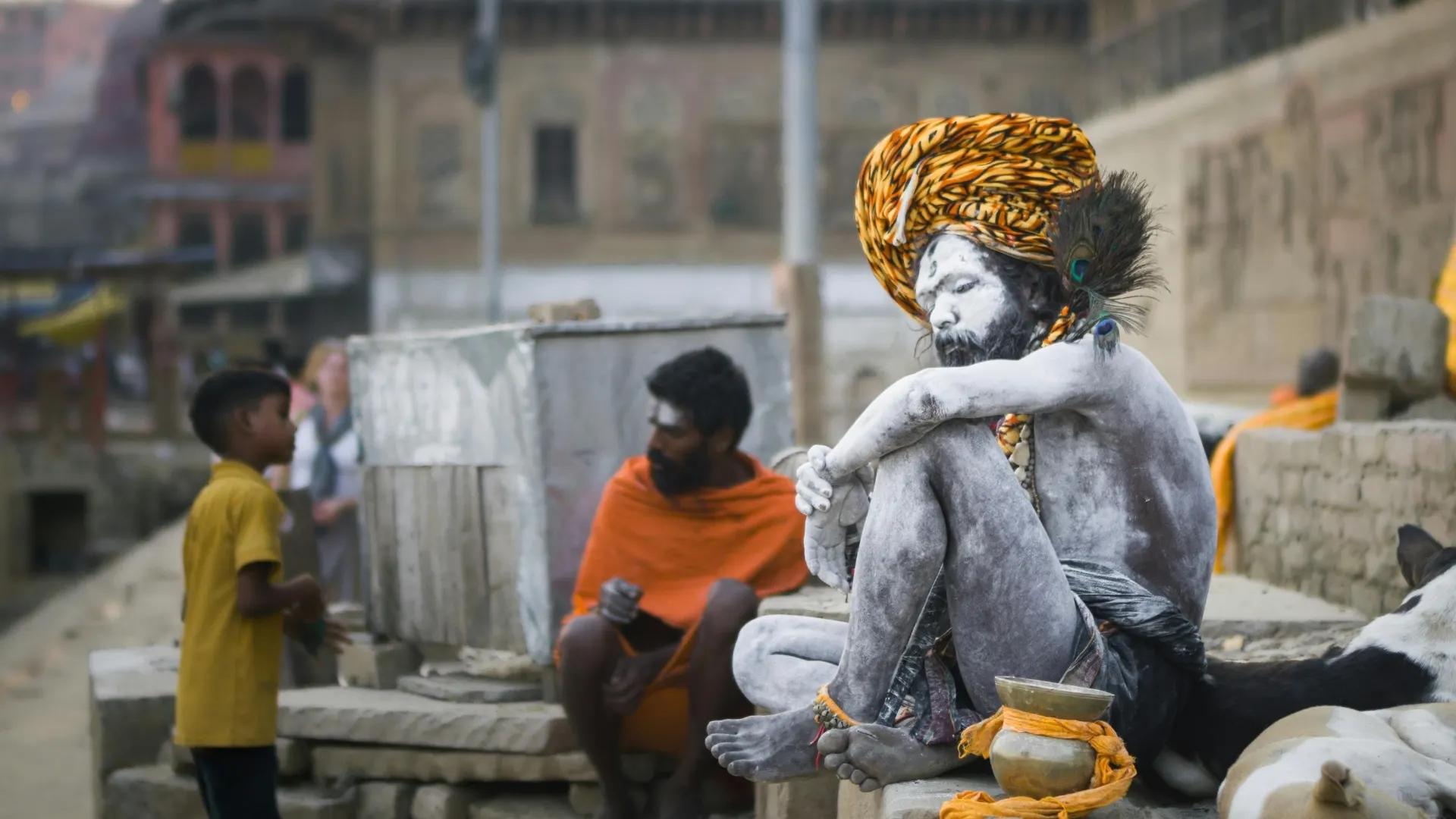
You can't drive the lanes between the ghats and the old city, and you wouldn't want to. A good guided walk ties together river rituals, small shrines, neighbourhood life, food, silk, religious institutions and the layout of the streets around Kashi Vishwanath.
If Kashi Vishwanath Temple matters to you, plan the morning around it. Security checks, queues and festival crowds can stretch the visit well beyond what you'd expect.
Plenty of travellers don't need a long run of temples, and for them the old city itself is the highlight. Tell your guide what draws you: Hindu ritual, architecture, craft, food, photography, or just how the river and the city fit together.
Then have lunch and go back to the hotel for a few hours. Midday is the easiest part of a Varanasi day to give up, and in the hotter months it's the hardest to enjoy anyway.
Day 1, evening: Ganga Aarti, once
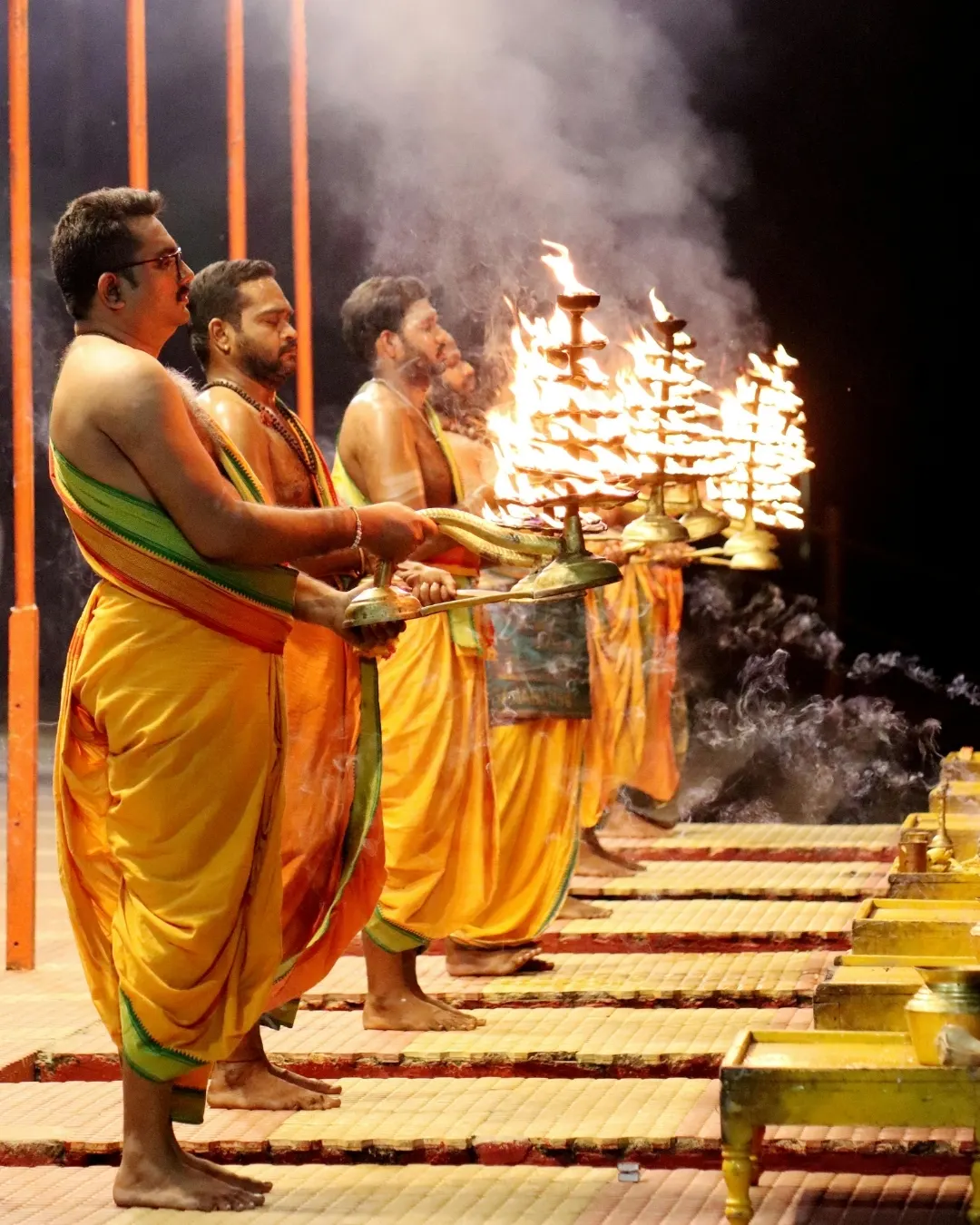
The best-known evening Ganga Aarti takes place at Dashashwamedh Ghat. Incredible India calls it a major daily ritual that draws large crowds of devotees. It's striking to watch, and it gets packed.
Decide beforehand whether to watch from the ghat or from a boat. On the ghat you feel the sound and size of the crowd up close. From the river you get a wider view, and you avoid standing shoulder to shoulder with hundreds of people.
Arrive early enough that getting there doesn't take over the evening. Weekends and festival dates need far more buffer than an ordinary weekday.
Afterwards, eat somewhere near your hotel or near where you leave the old city. It may still be early, but that's no reason to cross town again.
Day 2, morning: Sarnath deserves half a day
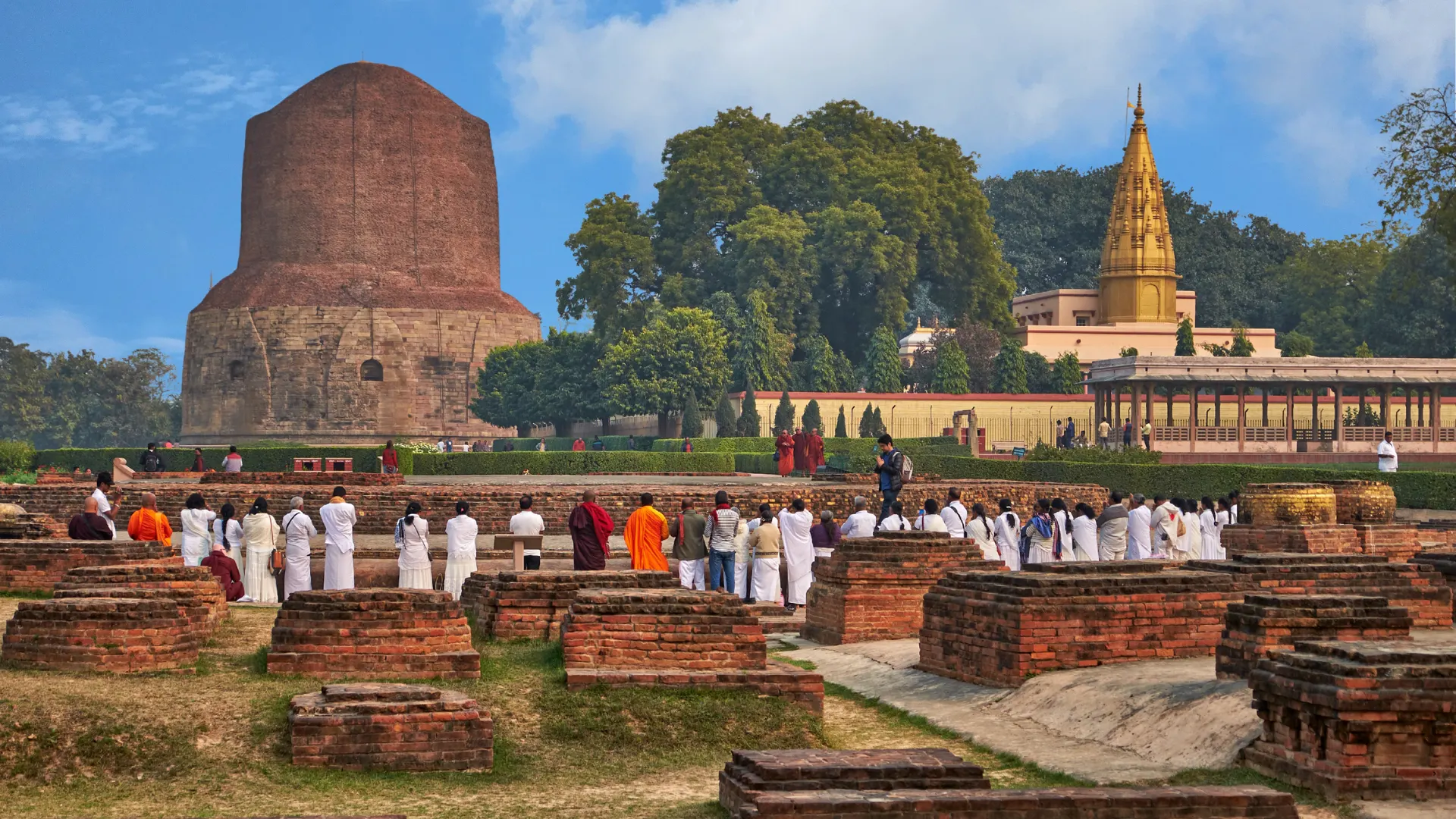
The Buddha gave his first sermon at Sarnath after his enlightenment, which makes it one of India's most important Buddhist sites. The archaeological area, Dhamek Stupa, the monasteries and the Sarnath Museum feel completely unlike the ghats.
The museum holds the original Lion Capital of Ashoka, the sculpture adapted for India's national emblem. That piece alone deserves more than a quick photo.
Go in the morning, before heading back into central Varanasi. Give yourself enough time for both the site and the museum, and don't pair Sarnath with another distant sight.
If you're on a longer Buddhist route through Bodh Gaya, Kushinagar or Lumbini, plan Sarnath as a major stop in its own right rather than a side trip from Varanasi.
Day 2, afternoon: go deeper into one thing
This is where the trip becomes yours. Pick one:
Weaving and textiles. Banarasi silk has more to it than shopping. A good visit shows how the work is made, who makes it and how the craft has changed, and it doesn't start in a showroom.
Music. Varanasi has a long classical music tradition. A private demonstration or a conversation with a musician often teaches you more than another temple would.
Food. This works best with a guide who can explain the neighbourhood, the season and the religious context behind each dish, not just walk you through a list of snacks.
Just one. Two days can't hold every version of Varanasi.
What to skip
Skip anything that repeats what you've already seen. Unless photography is the main reason you came, you don't need three boat rides. You don't need every temple in the old city, or repeated trips across town to tick off monuments.
Ramnagar Fort, Banaras Hindu University, more temples and craft visits further out are all good reasons for a third day. Your first two days are complete without them. Varanasi is at its best when a morning, an evening and a quieter half-day each feel different.
Where to stay
In Varanasi, where you stay shapes the trip more than in most Indian cities.
A hotel on the river or near the old city makes dawn and evening visits easy. The trade-off is limited vehicle access and more effort getting luggage in and out.
A larger hotel away from the riverfront is easier for cars, airport transfers and anyone who wants more space. The catch is that every visit to the ghats starts with a drive.
Neither option is better for everyone. Decide how much you want to be walking near the ghats, and how much you value easy car access and hotel facilities.
When to go
Incredible India names October to March as the most pleasant time for walking the ghats, exploring the old city and taking boat rides. The climate explains why: May can go above 45°C, and April, June and early autumn can be very hot too.
Winter mornings can be cold, and fog sometimes settles over the river. That changes the light but doesn't spoil the trip.
Dev Deepawali is one of the city's biggest festivals and can be extraordinary. It also brings bigger crowds, higher prices and harder movement around the ghats. If the festival is why you're going, plan the whole stay around it. Don't expect an ordinary two-day plan to run unchanged during it.
Fitting Varanasi into a North India trip
Varanasi works best as a deliberate eastern leg of the trip, not one more road stop after the Golden Triangle. Our current nine-day Golden Triangle and Varanasi route covers Delhi, Agra, Jaipur and Varanasi, and gives Varanasi its own proper time instead of tacking it onto the end.
On a shorter trip, fly or take the train only if the live timetable leaves you both usable days. With ten days in India, Varanasi should replace a stop, not squeeze onto an already full Rajasthan route.
The two days we'd choose
Day 1: dawn boat, old city on foot, a real midday break, evening Ganga Aarti.
Day 2: Sarnath in the morning, then an afternoon built around weaving, music, food or whatever interests you most.
That's enough for Varanasi to be more than a sunrise photo, without pretending two days can explain the whole city.
A note on photography
Varanasi is beautiful to photograph, but not every moment should become a picture. Ask before photographing people up close, especially while they're praying, bathing or performing a ritual. Take extra care at the cremation ghats, where families are carrying out funeral rites.
Some temples and religious institutions restrict photography inside or nearby. Follow local guidance, even if you see another visitor taking photos. A good photographer can come home with strong images without turning people's private religious life into a spectacle.
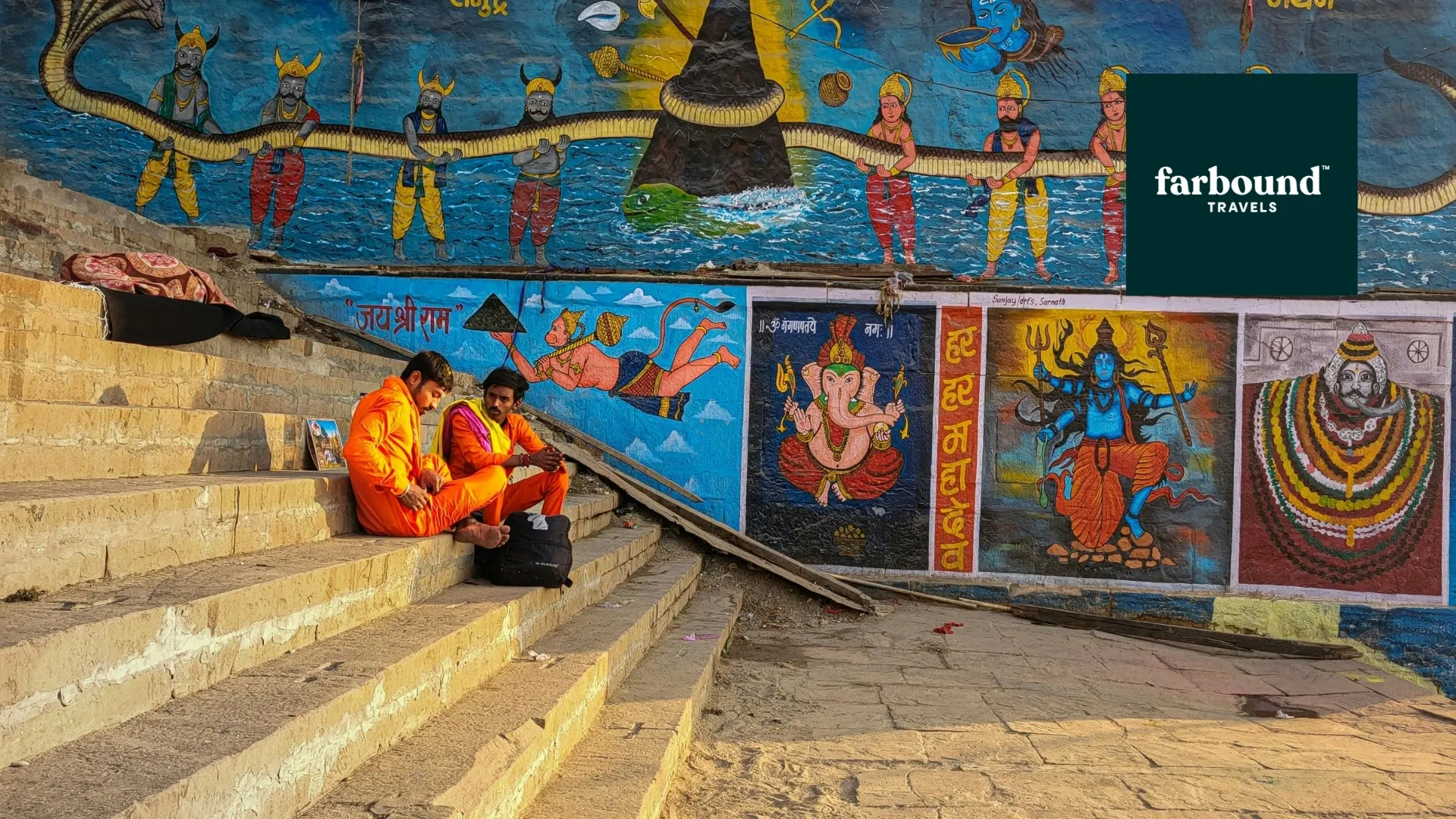
Only one night?
Choose one river moment and one old-city experience. If you arrive early enough, see the evening aarti, stay near the river and take the dawn boat before you leave. If you arrive too late for that, keep the dawn boat and the old-city walk, and skip the rush to Sarnath and back.
Sarnath deserves more than a hurried stop on the way to the airport. If you don't have a real second half-day, save it for another trip. One night can still be well spent. It just isn't the same trip as two full days.
Planning Varanasi as part of a North India journey? Tell us how many usable days you have and what draws you to the city, and we'll plan your two days around that instead of a standard checklist.
Good to know
Sources
- Incredible India — Varanasi destination page, climate, ghats and October-March guidance
- Incredible India — Dashashwamedh Ghat and Ganga Aarti
- Incredible India — Sarnath
- Incredible India — Sarnath Museum
- Farbound Travels — Golden Triangle & Varanasi journey structure
Written by Salil Tiwari.
Published September 2026
Keep reading
Train, Flight or Private Car: What Is the Best Way to Travel Around India?
The best transport in India changes by route. Use private cars for regional circuits, flights f...
Golden Triangle India: How Many Days Do You Actually Need?
Five days can cover Delhi, Agra and Jaipur. Six or seven days usually makes the Golden Triangle...